
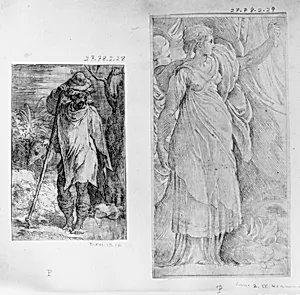
Judith
16th–early 17th century
Medium
Intaglio
Classification
Prints
Department
Drawings and Prints
Museum
Metropolitan Museum of Art, New York, NY
Credit
Harris Brisbane Dick Fund, 1927
Accession Number
27.78.2(304)
Rights
Public Domain
Tags
Art Historical Context
Behold *Judith*, a striking intaglio print from the16th to early 17th century, attributed the anonymous Italian artist or the Venetian master Andrea Schiavone (Andreaola). This work captures the dramatic biblical tale of Judith, the courageous widow who seduces and beheads the Assyrian general Holofernes save her people. Rendered in intricate detail, it features female nudes, men, and animals, evoking the tension and triumph of the scene with dynamic poses and emotional intensity. Intaglio, a sophisticated printmaking technique where the design is incised into a metal plate and ink is pressed into the grooves, allowed artists like Schiavone—known for his Mannerist style blending Venetian colorism with fluid forms—to produce multiples for wider dissemination. Popular in Renaissance Italy, such prints democratized high art, adorning homes and collections across Europe. Schiavone's innovative etching and engraving fused painting's expressiveness with print's precision, influencing later printmakers. Acquired through the Harris Brisbane Dick Fund in 1927, this piece from the Metropolitan Museum of Art's Drawings and Prints department exemplifies the era's fascination with heroic women and moral fortitude. Its survival highlights the enduring allure of classical narratives in art, inviting visitors to ponder Judith's bold agency amid Renaissance humanism.
About the Artist
Anonymous, Italian, 16th to early 17th century|Andrea Schiavone (Andrea Meldola) · 1500–1640
The artist known only as Anonymous, Italian, 16th to early 17th century, remains one of the many unidentified figures whose works survive in museum collections today. Active between roughly 1500 and 1640, this individual produced drawings, ornamental panels, and devotional subjects during a transformative period in Italian art that bridged the late Renaissance and the emerging Baroque. With no rec...