
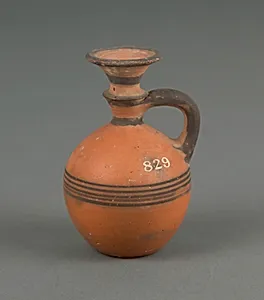
Jug
Unknown Artist
ca. 1050–900 BCE
Medium
Terracotta
Dimensions
H.: 8 3/8 in. (21.3 cm)
Classification
Vases
Culture & Period
Cypriot · Iron Age
Department
Greek and Roman Art
Museum
Metropolitan Museum of Art, New York, NY
Credit
The Cesnola Collection, Purchased by subscription, 1874–76
Accession Number
74.51.875
Rights
Public Domain
Art Historical Context
This elegant terracotta jug, dating to around 1050–900 BCE, hails from ancient Cyprus during the early Iron Age—a transformative period when the island bridged Bronze Age traditions and emerging Mediterranean influences. Standing just 8 3/8 inches (21.3 cm) tall, it exemplifies the practical yet refined pottery of Cypriot artisans, crafted from fired clay on a potter's wheel for everyday use, likely storing water, oil, or wine in households or rituals. As part of the vast Cypriot culture showcased in the Metropolitan Museum of Art's Greek and Roman Art Department, this vessel highlights Cyprus's role as a vibrant crossroads of trade and migration. The Iron Age marked the introduction of iron tools, Phoenician settlers, and new ceramic forms, making such jugs key artifacts for understanding daily life and technological shifts. Acquired through The Cesnola Collection in the 1870s—a pioneering assemblage of Cypriot antiquities—this piece invites us to envision the hands that shaped it millennia ago, connecting us to a world of seafaring merchants and resilient communities.