
Juglet
Unknown Artist
750–600 BCE
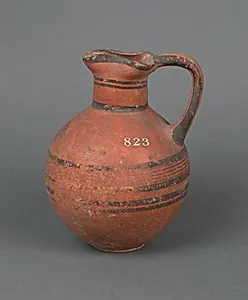
Medium
Terracotta
Dimensions
5in. (12.7cm)
Classification
Vases
Culture & Period
Cypriot · Cypro-Archaic I
Department
Greek and Roman Art
Museum
Metropolitan Museum of Art, New York, NY
Credit
The Cesnola Collection, Purchased by subscription, 1874–76
Accession Number
74.51.708
Rights
Public Domain
Art Historical Context
This delicate terracotta juglet, dating to the Cypro-Archaic I period (–600 BCE), hails from ancient Cyprus—a vibrant island culture at the crossroads of Greek,ician, and Near Eastern influences. Standing just 5 inches (12.7 cm) tall, these small vases were everyday marvels, likely used to hold precious oils, perfumes, or unguents. Crafted from fired clay on a potter's wheel, the juglet's simple form exemplifies Cypriot pottery traditions, prized for their functionality and widespread trade across the Mediterranean. Artistically, it reflects the Cypro-Archaic emphasis on practical beauty, with a slender neck and rounded body optimized for pouring. Terracotta's earthy warmth and durability made it ideal for both household use and ritual purposes, showcasing the skilled craftsmanship of anonymous potters who blended local innovation with imported styles. Though undecorated details are sparse, such vessels highlight Cyprus's role as a cultural bridge in the Iron Age. Acquired through The Cesnola Collection—Luigi Palma di Cesnola's pioneering 1874–76 purchases for the Metropolitan Museum of Art—this juglet offers a tangible link to Cyprus's prosperous ancient world. Visit it in the Greek and Roman Art department to appreciate how humble objects illuminate lost lives.