
Jug
Unknown Artist
9th century
Medium
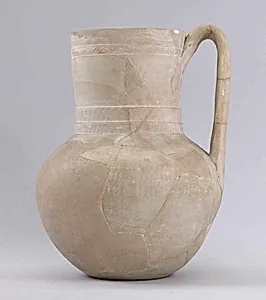
Earthenware; slip covered and incised, unglazed
Classification
Ceramics
Department
Islamic Art
Museum
Metropolitan Museum of Art, New York, NY
Credit
Rogers Fund, 1938
Accession Number
38.40.208
Rights
Public Domain
Tags
Art Historical Context
This elegant earthenware jug, created in the 9th, offers a window into the rich ceramic traditions of the Islamic world. Housed in the Metropolitan Museum of Art’s Department of Islamic Art, the piece exemplifies early Islamic pottery-making at a time when such vessels were essential for daily life, trade, and artistic expression across regions from the Middle East to North Africa. Its simple yet refined form reflects the era’s emphasis on functionality combined with subtle decoration. The jug’s construction—earthenware covered in slip and incised before being left unglazed—highlights a sophisticated technique that allowed artisans to create intricate surface patterns without the need for colorful glazes. This method, common in early Islamic ceramics, produced durable objects with a tactile, matte finish that emphasized the natural clay tones and carved designs. Such works demonstrate the skill of anonymous potters who elevated everyday items into objects of quiet beauty. As part of the museum’s collection acquired through the Rogers Fund in 1938, this jug reminds visitors of the enduring legacy of Islamic craftsmanship. Its unassuming presence invites us to appreciate how art and utility intertwined in the 9th century, connecting us to the hands that shaped it centuries ago.