
Jug
Unknown Artist
late 13th–early 14th century
Medium
Earthenware, glazed
Dimensions
Overall: 6 3/4 x 4 1/16 x 3 1/4 in. (17.1 x 10.3 x 8.2 cm)
Classification
Ceramics
Culture
British
Department
Medieval Art
Museum
Metropolitan Museum of Art, New York, NY
Credit
Rogers Fund, 1952
Accession Number
52.46.10
Rights
Public Domain
Art Historical Context
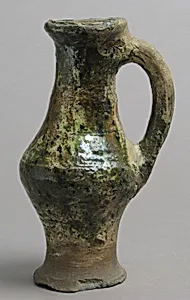
This unassuming jug, crafted by an unknown British artisan in the late 13th or early 14th century offers a glimpse into medieval daily life. Standing just 6 3/4 inches tall, its compact form—earthenware with a glossy glaze—suggests it was designed for practical use, perhaps pouring ale, water, or milk in a household setting. Housed in the Metropolitan Museum of Art's Medieval Art Department (acquired via the Rogers Fund in 1952), it exemplifies the humble ceramics that sustained ordinary folk during England's feudal era, a time of bustling markets, Gothic cathedrals, and evolving trade. The jug's earthenware body, fired from local clay, was coated with a lead-based glaze—a key innovation in medieval pottery. This technique not only sealed the porous surface for waterproofing but also added a subtle sheen, elevating everyday objects with a touch of artistry. British potters of this period drew from continental influences, blending functionality with simple decorative motifs, though this example's restrained design highlights restraint amid resource scarcity. As a survivor from over 700 years ago, this jug whispers of resilience: the hands that shaped it navigated plague precursors and royal upheavals. For visitors, it's a tactile portal to the past, reminding us that medieval Britain's cultural richness extended beyond illuminated manuscripts to the hearths of common homes.