
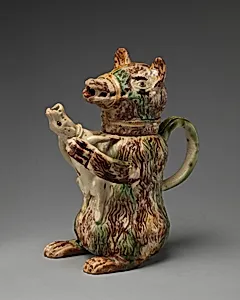
Jug in the form of a bear hugging a small dog
mid-18th century
Medium
Lead-glazed earthenware
Dimensions
Height: 9 in. (22.9 cm)
Classification
Ceramics-Pottery
Culture
British, Staffordshire
Department
European Sculpture and Decorative Arts
Museum
Metropolitan Museum of Art, New York, NY
Credit
Gift of R. Thornton Wilson, 1936
Accession Number
36.159.1a, b
Rights
Public Domain
Tags
Art Historical Context
This delightful jug, crafted in mid-18th-century Staffordshire, England, by the workshop of Astbury-Whieldon, captures playful spirit of British ceramic innovation. Shaped as a bear affectionately hugging a small dog, 9-inch-tall earthenware vessel exemplifies the era's fascination with whimsical, anthropomorphic figures. Lead-glazed for a glossy, vibrant finish, it transforms a functional drinking jug into a charming table ornament, blending utility with humor. Staffordshire potteries, led by figures like Thomas Astbury and Thomas Whieldon (who later collaborated with Josiah Wedgwood), were renowned for their affordable, mass-produced figurative wares. This piece reflects the mid-1700s boom in English earthenware, where bold colors and molded details made luxury accessible to the growing middle class. The bear-and-dog motif draws from folk traditions and tavern culture, evoking lively companionship and adding a touch of whimsy to everyday life. Today, housed in the Metropolitan Museum of Art's European Sculpture and Decorative Arts collection (gift of R. Thornton Wilson, 1936), it highlights Staffordshire's pivotal role in shaping decorative ceramics, influencing global pottery design with its lively storytelling through clay.