
Jug or 'Jacobakan'
ca. 1450 - ca. 1549
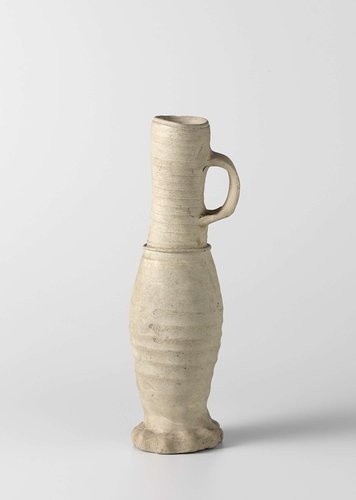
Medium
turning
Dimensions
7.9; 9.3; 27.2; 5.3; 8
Rights
Public Domain
About this artwork
voet: diameter 8 cm
Art Historical Context
Welcome to our exhibit featuring *Jug or 'Jacob'*, a delicate anonymous work from circa 1450–1549. Standing at 27.2 cm tall with a slender diameter of just 5.3 cm and a sturdy foot measuring 8 cm across, this elegant vessel exemplifies the refined craftsmanship of late medieval to early Renaissance artisans. Its narrow, elongated form suggests it was designed for pouring liquids like wine or ale, blending functionality with subtle aesthetic appeal. Crafted using the "turning" technique—where a lathe spins the material for precise, symmetrical shaping—this jug highlights the skill of unnamed workshops, likely in Northern Europe. Turning allowed for smooth curves and thin walls, creating objects that were both practical for daily use and objects of quiet beauty. The broad base provides stability, a thoughtful detail in an era before modern manufacturing. Though anonymous, pieces like this *Jacobakan* offer a window into everyday life during a transformative period, bridging Gothic traditions and emerging Renaissance humanism. Its survival speaks to the enduring value placed on such utilitarian art, reminding us how ordinary items carried cultural weight in pre-industrial societies.
About the Artist
anonymous
In the vast tapestry of art history, "Anonymous" stands not as a singular individual but as a collective designation for countless unidentified creators whose works have endured across millennia. These artists, spanning prehistoric cave painters to medieval illuminators and folk craftsmen, produced the foundational layers of human visual culture. Prior to the Renaissance, when individual fame emer...