
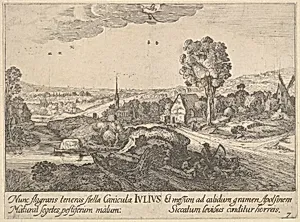
July (Iulius)
Medium
Etching
Classification
Prints
Department
Drawings and Prints
Museum
Metropolitan Museum of Art, New York, NY
Credit
The Elisha Whittelsey Collection, The Elisha Whittelsey Fund, 1951
Accession Number
51.501.5452
Rights
Public Domain
Tags
Art Historical Context
Created between 1628 and 1629, *July (Iulius)* is an etching that forms part of a series depicting the months of the year, a popular theme in 17th-century Dutch art. Jan van de Velde II, a leading figure in the Dutch Golden Age of printmaking, collaborated here with Wenceslaus Hollar to portray the rhythms of rural life during midsummer. The work belongs to the Metropolitan Museum of Art’s collection of prints and reflects the era’s fascination with seasonal cycles and the countryside. Etching allowed artists to achieve fine detail and atmospheric effects, making it ideal for rendering expansive landscapes, clustered villages, and small human figures engaged in daily activities. This medium helped bring affordable images of nature and ordinary life to a wide audience, underscoring the cultural value placed on both agriculture and the changing seasons in the Dutch Republic. Through its delicate lines and balanced composition, the print invites viewers to appreciate the quiet beauty of July’s light and labor, offering a timeless glimpse into 17th-century perceptions of time and place.
About the Artist
Jan van de Velde II|Wenceslaus Hollar · 1593–1641
Jan van de Velde II (1593–1641) was one of the most accomplished Dutch printmakers and draughtsmen of the early seventeenth century, born in Haarlem into a dynasty of celebrated calligraphers and artists. His father, Jan van de Velde I, was a renowned writing master, and his cousin Willem van de Velde the Elder would later become a distinguished marine painter. Jan II studied engraving under Jacob...