
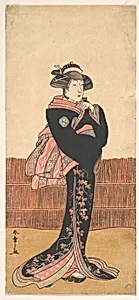
勝川春章画 三代目吾妻藤蔵|Kabuki Actor Azuma Tōzō III
probably 1782
Medium
Woodblock print (nishiki-e); ink and color on paper
Dimensions
12 5/8 x 5 2/3 in. (32.1 x 14.4 cm)
Classification
Prints
Culture & Period
Japan · Edo period (1615–1868)
Department
Asian Art
Museum
Metropolitan Museum of Art, New York, NY
Credit
Purchase, Joseph Pulitzer Bequest, 1918
Accession Number
JP363
Rights
Public Domain
Tags
Art Historical Context
This vibrant woodblock print by Katsukawa Shunshō captures Kabuki actor Azumaōzō III, a celebrated performer of Japan’s Edo period (1615–1868). Created around 1782, the work belongs to the ukiyo-e tradition, which celebrated the fleeting pleasures of urban life, including theater and fashion. Shunshō, founder of the influential Katsukawa school, specialized in actor portraits known as yakusha-e. His sensitive depictions helped fans connect with stars of the stage long before photography. The print employs the nishiki-e technique, using multiple carved blocks to apply rich colors—a technical achievement that made these affordable images wildly popular. Measuring just over 12 by 5 inches, the narrow format was typical for actor portraits meant to be collected or displayed in homes. Through delicate lines and expressive features, Shunshō conveys both the individual charisma of Azuma Tōzō III and the dramatic intensity of Kabuki performance. Today housed at The Metropolitan Museum of Art, this work offers a vivid glimpse into Edo-era entertainment culture and the artistry of Japanese printmaking.
About the Artist
Katsukawa Shunshō · 1726–1792
Katsukawa Shunshō (1726–1793) revolutionized ukiyo-e printmaking by introducing realistic portraiture to kabuki actor prints, founding the Katsukawa school that would dominate theatrical imagery in late 18th-century Japan. Born in 1726, Shunshō transformed the conventional approach to yakusha-e (actor prints) by depicting performers with individual facial features and genuine likenesses rather tha...