
勝川春章画 三代目瀬川菊之丞|Kabuki Actor Segawa Kikunojō III
ca. 1777
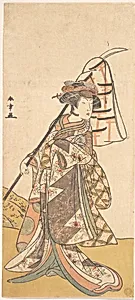
Medium
Woodblock print (nishiki-e); ink and color on paper
Dimensions
12 11/32 x 5 17/32 in. (31.4 x 14.1 cm)
Classification
Prints
Culture & Period
Japan · Edo period (1615–1868)
Department
Asian Art
Museum
Metropolitan Museum of Art, New York, NY
Credit
Purchase, Joseph Pulitzer Bequest, 1918
Accession Number
JP376
Rights
Public Domain
Tags
Art Historical Context
This woodblock print by Katsukawa Shunshō captures the renowned kabuki actor Segawa Kikunojō III, celebrated for his performances as an onnagata, or female impersonator. Created around 1777 during Japan’s Edo period, the work exemplifies the ukiyo-e tradition of actor portraits, or yakusha-e, which brought the vibrant world of the theater to a broad audience through affordable prints. Shunshō, a leading figure in the Katsukawa school, helped elevate these portraits by emphasizing individualized facial features and expressive poses rather than generic types. The medium of nishiki-e, or “brocade picture,” allowed for rich, multi-colored printing using multiple woodblocks—a technical innovation that flourished in the late eighteenth century. Measuring just over twelve inches tall, this narrow format was typical of hosoban prints designed for easy display or collection by theater enthusiasts. The delicate use of ink and color on paper highlights the actor’s elaborate costume and graceful demeanor, reflecting the refined aesthetics of kabuki performance. As part of the Metropolitan Museum’s Asian Art collection, the print offers a vivid glimpse into Edo-period entertainment culture, where actors like Segawa Kikunojō III were celebrated celebrities whose images circulated widely among fans.
About the Artist
Katsukawa Shunshō · 1726–1792
Katsukawa Shunshō (1726–1793) revolutionized ukiyo-e printmaking by introducing realistic portraiture to kabuki actor prints, founding the Katsukawa school that would dominate theatrical imagery in late 18th-century Japan. Born in 1726, Shunshō transformed the conventional approach to yakusha-e (actor prints) by depicting performers with individual facial features and genuine likenesses rather tha...