
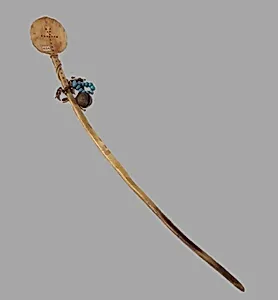
Kah-To-To-Hay (rattle)
19th century
Medium
Horn,brass, ,porcelain, rawhide, cloth
Dimensions
Overall:: 49.5cm (19 1/2in.)
Classification
Idiophone-Shaken-rattle
Culture
Native American (Sioux, possibly)
Department
Musical Instruments
Museum
Metropolitan Museum of Art, New York, NY
Credit
The Crosby Brown Collection of Musical Instruments, 1889
Accession Number
89.4.634
Rights
Public Domain
Art Historical Context
Nestled in the Metropolitan Museum of Art's Crosby Brown Collection of Musical Instruments, the *Kah-To-To-Hay* rattle hails from the Sioux or Dakota tribe of the 19th century. Measuring 49.5 cm long, this striking idiophone—classified as a shaken rattle—serves as a vital tool in Native American musical and ceremonial traditions. Its name, evocative of its resonant sound, underscores its role in evoking rhythm and spirit during communal gatherings. Crafted from an eclectic array of materials—horn for the body, brass and porcelain beads for percussion, rawhide for binding, and cloth accents—the rattle exemplifies resourceful Sioux ingenuity. Shaking it produces a cascade of sounds as the beads strike against the horn, creating layered tones ideal for powwows, dances, or rituals. This fusion of natural and traded elements reflects 19th-century intertribal exchanges and adaptation. As a window into Plains Indian culture, the *Kah-To-To-Hay* highlights the rattles' spiritual significance, often linked to storytelling and healing practices among the Sioux peoples. Acquired in 1889, it preserves a tangible echo of indigenous artistry, inviting visitors to imagine its lively pulse in ancestral hands.