
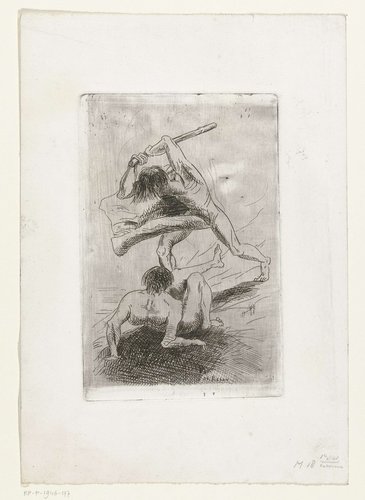
Kaïn doodt Abel
1886
Medium
etching
Dimensions
184; 120
Rights
Public Domain
About this artwork
plaatrand: hoogte 184 mm x breedte 120 mm
Art Historical Context
**Kaïn doodt Abel (Cain Slays Abel)**, an etching by French Symbolist artist Odilonon from 1886, captures biblical tale of fratricide with haunting intensity. Measuring just 184 mm high by 120 mm wide, this intimate print draws viewers into a shadowy world of moral turmoil, reflecting Redon's mastery of his "noir" period—works in black and white that evoke dreams, mystery, and the subconscious before his later shift to vibrant colors. Redon, a pioneer of Symbolism, infused etching's fine lines and tonal depths with ethereal, visionary qualities, departing from realism to explore psychological and spiritual depths. The medium's precision allowed him to layer subtle textures, creating an otherworldly atmosphere around the ancient story from Genesis, where Cain murders his brother Abel out of jealousy. This piece exemplifies Symbolism's focus on inner emotions over literal narrative, inviting contemplation of human darkness. Displayed in museums worldwide, Redon's etchings like this one highlight printmaking's role in disseminating avant-garde ideas in late 19th-century France, bridging Romanticism and modern art. A poignant reminder of eternal themes, it whispers of redemption amid tragedy.
About the Artist
Odilon Redon · 1840–1916
Odilon Redon (1840-1916) was a French Symbolist painter, printmaker, and pastellist whose visionary art bridged the 19th-century Symbolist movement and 20th-century Surrealism. Born Bertrand Redon in Bordeaux on April 20, 1840, he earned the nickname "Odilon" from his mother Odile. His father, who made his fortune in the Louisiana slave trade, conceived Odilon in New Orleans before the family retu...