
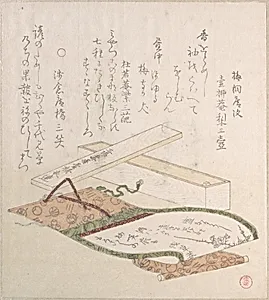
Kakemono and Its Box
18th–19th century
Medium
Woodblock print (surimono); ink and color on paper
Dimensions
8 x 7 3/16 in. (20.3 x 18.3 cm)
Classification
Prints
Culture
Japan
Department
Asian Art
Museum
Metropolitan Museum of Art, New York, NY
Credit
H. O. Havemeyer Collection, Bequest of Mrs. H. O. Havemeyer, 1929
Accession Number
JP2175
Rights
Public Domain
Tags
Art Historical Context
Kubo Shunman's *Kakemono and Its Box* is a delicate surimono woodblock print Japan's Edo period (18th–19th century), showcasing the artist's mastery in the ukiyo-e tradition Surimono, meaning "printed things," were privately commissioned luxury prints, often for New Year's greetings or poetry gatherings among Kyoto-Osaka elites. Measuring just 8 x 7 3/16 inches, this intimate format allowed for exquisite details, vibrant colors, and subtle techniques like embossing and mica dusting, making each piece a treasured keepsake. The composition lovingly depicts a kakemono—a traditional Japanese hanging scroll—and its ornate storage box, symbols of refined cultural appreciation. Kakemono, typically featuring ink paintings or calligraphy on silk or paper, were unrolled for special occasions, embodying wabi-sabi aesthetics of impermanence and beauty. Shunman (1777–1845), renowned for his poetic kyoka illustrations, captures the scroll's elegance with precise lines and harmonious colors, inviting viewers to ponder the artistry within artistry. Housed in the Metropolitan Museum of Art's H. O. Havemeyer Collection, this print highlights Japan's woodblock printing innovation, bridging everyday life and high art. It's a window into an era when such objects fostered community and creativity among literati.
About the Artist
Kubo Shunman · 1757–1820
Japanese, 1757–1820