
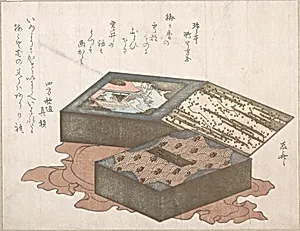
Cakes In a Box with Wrapping Cloth
19th century
Medium
Part of an album of woodblock prints (surimono); ink and color on paper
Dimensions
6 3/4 x 8 3/4 in. (17.1 x 22.2 cm)
Classification
Prints
Culture
Japan
Department
Asian Art
Museum
Metropolitan Museum of Art, New York, NY
Credit
H. O. Havemeyer Collection, Bequest of Mrs. H. O. Havemeyer, 1929
Accession Number
JP2269
Rights
Public Domain
Tags
Art Historical Context
Nestled within an intimate album of woodblock prints *Cakes In a Box withapping Cloth* by Ryryūkyo Shinsai captures the delicate artistry of 19th-century. Created as a *surimono*—a luxurious, privately commissioned print—this small gem (just 6 3/4 x 8 3/4 inches) showcases an elegantly arranged box of wagashi, traditional Japanese sweets, draped in fine wrapping cloth. Shinsai, a master of the ukiyo-e tradition, renders the moist sheen of the cakes and the subtle folds of fabric with exquisite precision, inviting viewers to savor the scene's quiet abundance. Surimono like this one were often produced for special occasions, such as New Year's celebrations or poetry gatherings, blending visual beauty with cultural refinement. The woodblock technique, using ink and vibrant colors on paper, allowed for intricate details and subtle gradients, evoking the sensory pleasure of food in a society where presentation was as vital as taste. These prints highlight Japan's Edo-period fascination with everyday luxuries, transforming humble sweets into symbols of hospitality and festivity. Today, this piece from the H. O. Havemeyer Collection graces the Metropolitan Museum of Art's Asian Art department, offering a window into the poetic elegance of Japanese printmaking. Its modest scale belies its cultural depth, reminding us how art can elevate the simple joy of a boxed treat.
About the Artist
Ryūryūkyo Shinsai · 1799–1823
Ryūryūkyo Shinsai (柳々居辰斎), active from 1799 to 1823, was a prominent Japanese ukiyo-e printmaker based in Edo (modern Tokyo), renowned for his mastery of surimono—luxurious, privately commissioned woodblock prints produced for elite poetry circles and New Year's celebrations. He began his training under Tawaraya Sōri before becoming a student of the legendary Katsushika Hokusai, from whom he recei...