
Kandelaar
c. 1400 - c. 1500
Medium
casting
Dimensions
34.5; 14
Rights
Public Domain
About this artwork
hoogte 34,5 cm x diameter 14 cm (voet)
Art Historical Context
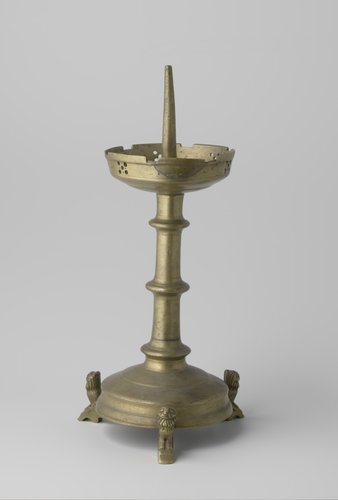
This elegant candlestick, known simply as *Kandelaar*, dates the late medieval period around 1400–1500, a time of transition from Gothic artistry to the budding Renaissance in Northern Europe. Crafted anonymously by skilled metalworkers, it stands at approximately 34.5 cm tall with a sturdy 14 cm diameter foot, designed for stability on tables or altars. Its cast metal construction—likely using the sophisticated lost-wax technique—highlights the era's advanced foundry skills, where molten metal was poured into detailed molds to create functional yet refined objects. In medieval households and churches, candlesticks like this were essential for illumination, warding off darkness in an age without electricity. They often symbolized prosperity and piety, with the flared base and socket allowing beeswax candles to burn steadily during long evenings of prayer or feasting. Surviving examples are rare, underscoring the piece's cultural value as a testament to everyday craftsmanship amid the Black Death's aftermath and rising trade in luxury metals. Today, this anonymous work captivates with its timeless utility and subtle grace, inviting us to imagine the flickering light it once cast on 15th-century lives. A quiet survivor of history, it bridges art and daily ritual.
About the Artist
anonymous
In the vast tapestry of art history, "Anonymous" stands not as a singular individual but as a collective designation for countless unidentified creators whose works have endured across millennia. These artists, spanning prehistoric cave painters to medieval illuminators and folk craftsmen, produced the foundational layers of human visual culture. Prior to the Renaissance, when individual fame emer...