
Kandelaar
1740 - 1770
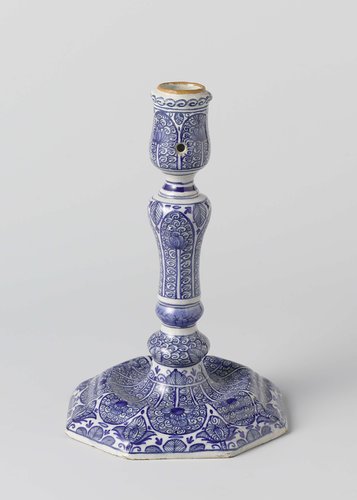
Medium
candlestick
Dimensions
11; 18.2
Rights
Public Domain
About this artwork
height 18.2 cm x width 11 cm
Art Historical Context
### 18th-Century Dutch Candlestick (*Kandelaar*) This elegant *kandelaar*, or candlestick, dating from 1740 to 1770, exemplifies anonymous craftsmanship from the Dutch Golden Age's later phase. Standing at a modest height of 18.2 cm with a width of 11, it was designed for tabletop use in prosperous households, providing essential illumination in an era before widespread electric lighting. Likely crafted from metal such as brass or pewter—common materials for such utilitarian objects—its compact form suggests it held a single candle, balancing functionality with subtle decorative appeal. In the context of 18th-century Netherlands, candlesticks like this were more than mere tools; they were status symbols reflecting the era's refined domestic culture. During the Rococo period's influence, Dutch silversmiths and metalworkers favored graceful curves, flared bases for stability, and perhaps simple engravings, though this piece's anonymity highlights the skilled guild artisans who produced them in workshops across cities like Amsterdam or Delft. These objects bridged everyday life and artistry, often passed down through families as heirlooms. Today, this *kandelaar* invites us to appreciate the unsung artistry in ordinary items. Its survival speaks to the durability of 18th-century design, reminding visitors of how light once danced in Dutch homes, casting warm glows on scenes of quiet prosperity. A testament to collective ingenuity, it underscores the cultural value placed on well-made domestic wares.
About the Artist
anonymous
In the vast tapestry of art history, "Anonymous" stands not as a singular individual but as a collective designation for countless unidentified creators whose works have endured across millennia. These artists, spanning prehistoric cave painters to medieval illuminators and folk craftsmen, produced the foundational layers of human visual culture. Prior to the Renaissance, when individual fame emer...