
Karper
1900 - 1930
Medium
color woodcut
Dimensions
348; 186
Rights
Public Domain
About this artwork
kleurenhoutsnede
Art Historical Context
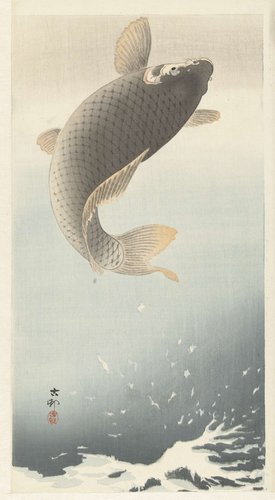
Ohara Koson’s “Karper” captures the quiet grace of a carp gliding through water, rendered in the refined tradition of Japanese woodblock printing. Created between 1900 and 1930, this color woodcut exemplifies Koson’s mastery of kacho-e—bird-and-flower imagery—where every scale and ripple is suggested through delicate lines and subtle color gradations rather than bold outlines. During Japan’s Taisho and early Showa eras, Koson contributed to the shin-hanga movement, which revived classical ukiyo-e techniques while appealing to both domestic and international audiences. The medium itself is central to the work’s appeal: multiple carved cherry-wood blocks were inked separately and printed in sequence, allowing luminous layers of color to evoke the fish’s shimmering scales and the surrounding water. Measuring just 348 by 186 millimeters, the print rewards close viewing. Its modest size and harmonious palette reflect the period’s emphasis on refined observation of nature, inviting viewers to appreciate both the subject’s vitality and the centuries-old craft that brought it to life.
About the Artist
Ohara Koson · 1877–1945
Ohara Koson (1877-1945) was the most successful ukiyo-e artist of the shin-hanga period, renowned for his mastery of kacho-e (bird-and-flower prints). Born in Kanazawa and dying in Tokyo, Koson produced approximately 500 prints during a prolific career that spanned the late Meiji, Taisho, and early Showa periods. His work exemplifies the shin-hanga movement's successful adaptation of traditional J...