
Kawabiraki
ca. 1805
Medium
Woodblock print; ink and color on paper
Dimensions
H. 9 3/8 in. (23.8 cm); W. 14 1/6 in. (36 cm)
Classification
Prints
Culture & Period
Japan · Edo period (1615–1868)
Department
Asian Art
Museum
Metropolitan Museum of Art, New York, NY
Credit
Rogers Fund, 1922
Accession Number
JP1417
Rights
Public Domain
Tags
Art Historical Context
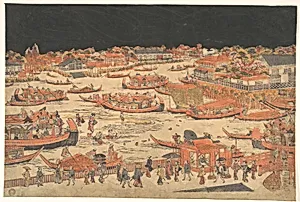
Created around 1805 Japan’s vibrant Edo period, *Kabiraki* captures a lively riverside celebration along the Sumida River in Edo (modern-day Tokyo). Utagawa Toyoharu, founder of the influential Utagawa school of ukiyo-e, depicts crowds gathering to mark the annual opening of the river for pleasure boating. The scene brims with elegantly dressed figures on boats and along the banks, reflecting the era’s growing urban leisure culture and the popularity of seasonal festivals. As a woodblock print rendered in ink and color on paper, this work exemplifies the accessible yet sophisticated art form that flourished in Edo Japan. Toyoharu’s use of perspective—drawing from both Japanese and Western influences—adds depth to the bustling river vista, inviting viewers to feel immersed in the festive atmosphere. Acquired by the Metropolitan Museum of Art in 1922, the print offers a delightful window into the everyday joys and artistic innovations of its time.
About the Artist
Utagawa Toyoharu · 1735–1814
Utagawa Toyoharu (1735–1814) holds a foundational place in the history of Japanese printmaking as the founder of the prolific and long-lived Utagawa school, which would go on to produce some of the most celebrated names in ukiyo-e, including Hiroshige and Kuniyoshi. Born in what is now Hyogo Prefecture, Toyoharu moved to Edo, where he studied under Toriyama Sekien and later explored the Kano schoo...