Ctrl K

1735–1814
Utagawa Toyoharu (1735–1814) holds a foundational place in the history of Japanese printmaking as the founder of the prolific and long-lived Utagawa school, which would go on to produce some of the most celebrated names in ukiyo-e, including Hiroshige and Kuniyoshi. Born in what is now Hyogo Prefecture, Toyoharu moved to Edo, where he studied under Toriyama Sekien and later explored the Kano school tradition before developing his distinctive approach.
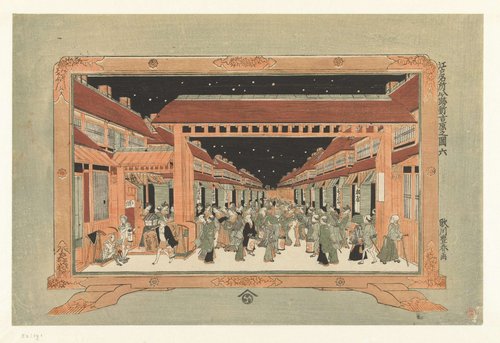
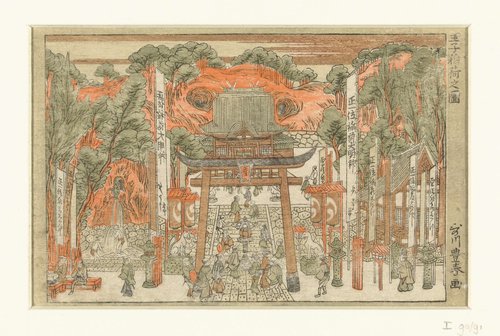
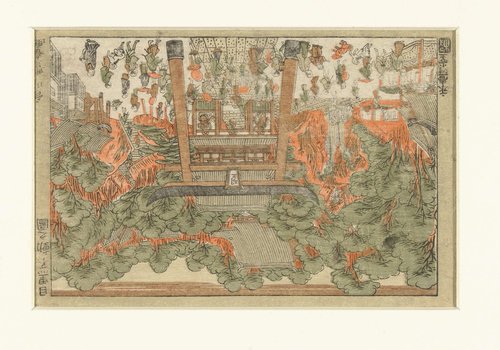
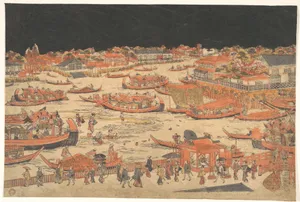
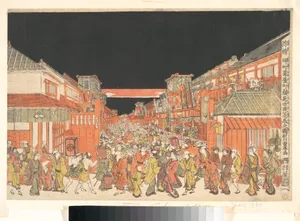
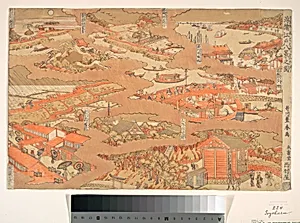
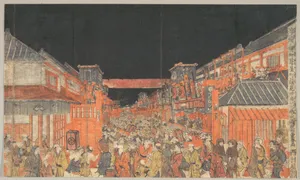
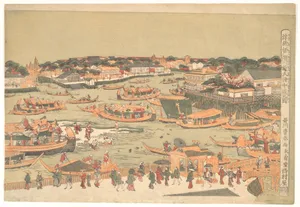
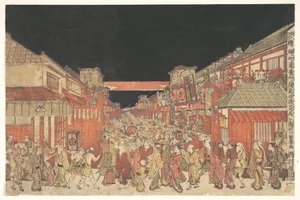
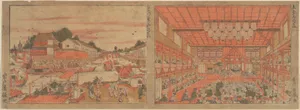
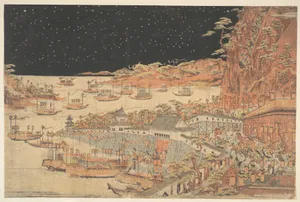
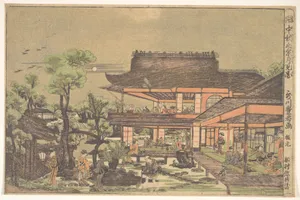
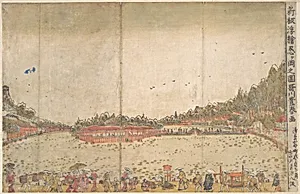
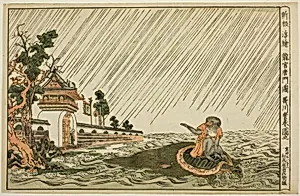
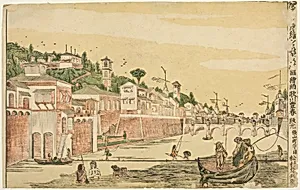
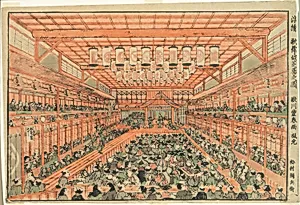
Toyoharu became particularly noted for his uki-e, or perspective pictures — woodblock prints that adapted Western techniques of linear perspective to create dramatic illusions of depth in scenes of theaters, interiors, and urban landscapes. These works demonstrated a remarkable openness to European pictorial conventions circulating through Dutch trade contacts at Nagasaki, and Toyoharu applied these foreign principles with genuine sophistication to Japanese settings and subjects.
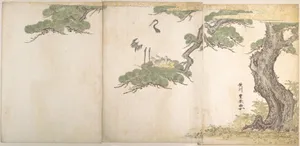
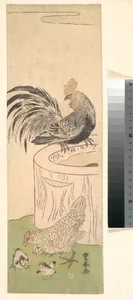
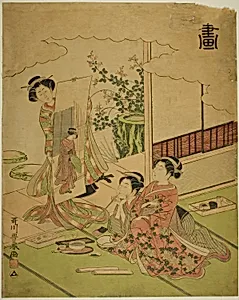
Beyond his perspective experiments, Toyoharu produced actor prints, bijin-ga (pictures of beautiful women), and landscapes, contributing across the full range of ukiyo-e subject matter. His greatest achievement may ultimately have been pedagogical: the school he founded attracted extraordinary talent, and through students such as Utagawa Toyokuni, the Utagawa lineage became the dominant force in nineteenth-century Japanese printmaking.
Toyoharu's legacy is therefore twofold — as an innovative printmaker who helped introduce spatial depth into ukiyo-e, and as a teacher and institution-builder whose school transformed the landscape of Japanese art. The Utagawa school's eventual influence on Western artists, including Vincent van Gogh and the French Impressionists who collected ukiyo-e prints, extends Toyoharu's indirect reach across oceans and centuries.