
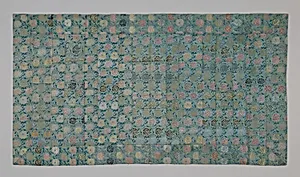
Kesa
late Edo period (1789–1868), early 19th century
Dimensions
114.3 × 207.4 cm (45 × 81 5/8 in.)
Classification
textile
Department
Textiles
Museum
Art Institute of Chicago
Accession Number
48270
Rights
Public Domain
Art Historical Context
This exquisite *Kesa*, a traditional Japanese Buddhist monk's stole from the late Edo period ( 19th century), the refined textile artistry of Japan's Tokugawa era. Measuring 114.3 × 207.4 cm, it was designed to drape over a monk's robes during rituals, symbolizing humility through its patchwork construction—often pieced from discarded fabrics to evoke impermanence and non-attachment. Produced during a time of cultural flourishing under isolationist policies, such garments were prized possessions in Zen and other Buddhist sects, blending spirituality with aesthetic mastery. Though the specific medium remains unidentified, kesas like this typically feature silk weaves, intricate embroidery, or subtle dyeing techniques that highlight the Edo period's technical innovations in textiles. Worn by clergy, they served not just practical purposes but also as meditative objects, their bold geometries and motifs drawing the eye to contemplate life's transience. Housed in the Art Institute of Chicago's Textiles Department, this piece offers a window into Japan's pre-modern religious life, where craftsmanship met profound philosophy. (178 words)
About the Artist
Unknown
The artist designated as "Unknown" in our virtual museum's collection exemplifies a poignant chapter in art history: creators whose identities have faded into obscurity despite the enduring power of their work. With only one known artwork attributed to them in our holdings, this figure represents countless anonymous hands that shaped visual culture across centuries. Museums worldwide, including th...