
Kiezen van de deugd
Medium
engraving
Dimensions
223; 300
Rights
Public Domain
About this artwork
gravure
Art Historical Context
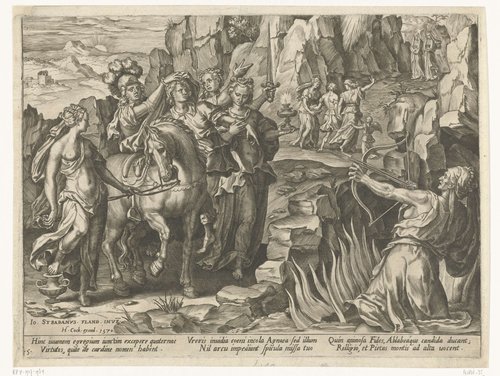
**Kiezen van de deugd (Choice of Virtue)** Pieter Jalhea Furnius 1570* *Engraving, 223 × 300 mm* Step into the intricate world of 16th Northern European printmaking with Pieter Jalhea Furnius's *Kiezen van de deugd*, or "Choice of Virtue," an engraving from 1570. Created during the height of the Renaissance in the Low Countries, this work reflects the era's fascination with moral allegory, where virtue triumphs over vice—a theme popularized in emblem books and didactic art amid religious upheavals like the Reformation and the Dutch Revolt against Spanish rule. Furnius, a skilled engraver of the time, captures this timeless ethical dilemma through finely wrought lines, inviting viewers to ponder life's moral crossroads. As an engraving, the piece exemplifies the revolutionary medium of the period: copper plates incised with a burin allowed for precise detailing and mass reproduction, democratizing art beyond elite patrons. At 223 by 300 mm, its modest scale belies the technical mastery required for depth, texture, and narrative clarity—hallmarks of Netherlandish print traditions influenced by masters like Albrecht Dürer. This gravure not only served as affordable moral instruction for households but also contributed to the burgeoning culture of visual storytelling, blending artistry with ethical guidance. Today, *Kiezen van de deugd* reminds us how Renaissance prints bridged art and philosophy, offering a window into the values that shaped early modern Europe. A gem for any collection!
About the Artist
Pieter Jalhea Furnius · 1530–1615
Pieter Jalhea Furnius (1530–1615, though some sources suggest 1545–1610) was a Flemish engraver and draughtsman who worked during the height of Antwerp Mannerism, creating engravings that disseminated the works of prominent Northern European artists throughout Europe. Trained under the renowned painter Lambert Lombard in Liège, Furnius established himself in Antwerp, the commercial and artistic ca...