
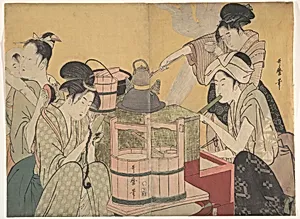
Kitchen Scene
ca. 1794–95
Medium
Diptych of woodblock prints; ink and color on paper
Dimensions
Image (each): 14 5/8 × 9 7/8 in. (37.1 × 25.1 cm) Image (diptych): 14 5/8 × 19 3/4 in. (37.1 × 50.2 cm) Framed: 24 1/4 × 30 3/4 in. (61.6 × 78.1 cm)
Classification
Prints
Culture & Period
Japan · Edo period (1615–1868)
Department
Asian Art
Museum
Metropolitan Museum of Art, New York, NY
Credit
Rogers Fund, 1922
Accession Number
JP1369a, b
Rights
Public Domain
Tags
About this artwork
This prints by japanese artist Kitagawa Utamaro exemplifies the artistic achievements of ca. 1794–95. Japanese artists developed sophisticated visual traditions with distinct aesthetic principles that profoundly influenced both Eastern and Western art. The artist's work in diptych of woodblock prints; ink and color on paper demonstrates the importance of printmaking as both an artistic medium and a means of disseminating images widely. Executed in diptych of woodblock prints; ink and color on pa...
Art Historical Context
Kitagawa Utamaro'sKitchen Scene*, created around 1794–95 during Japan's Edo period (1615–1868), captures the intimate warmth of domestic life through a diptych of woodblock prints in ink and color on paper This ukiyo-e masterpiece—part of the "floating world" genre celebrating everyday pleasures—depicts women and children engaged in cooking and food preparation, offering a vivid glimpse into 18th-century Japanese households. Utamaro, renowned for his bijin-ga (images of beautiful women), infuses the scene with graceful figures and subtle emotional depth, elevating mundane activities into poetic artistry. The diptych format, measuring about 14⅝ × 19¾ inches when joined, exemplifies the technical brilliance of woodblock printing. Artisans carved intricate designs into wooden blocks, layered vibrant colors, and pressed them onto paper, allowing multiple impressions for widespread accessibility. This medium democratized art, bridging elite aesthetics with popular culture, and showcased Japan's refined craftsmanship rooted in harmony and naturalism. Preserved in the Metropolitan Museum of Art's Asian Art collection (Rogers Fund, 1922), *Kitchen Scene* highlights Utamaro's influence on global art, inspiring later Western artists like those in Japonisme. It invites visitors to appreciate how such prints wove beauty into the fabric of daily life, blending utility, joy, and timeless elegance.
About the Artist
Kitagawa Utamaro · 1753–1806
Kitagawa Utamaro (c. 1753-1806) was one of the most celebrated masters of ukiyo-e woodblock printing, revolutionizing the art of bijin-ga (pictures of beautiful women) during Japan's Edo period. Born Kitagawa Ichitaro, his early life remains shrouded in mystery, with conflicting accounts placing his birth in Kyoto, Osaka, Yoshiwara in Edo (modern Tokyo), or Kawagoe in Musashi Province. Under the t...