
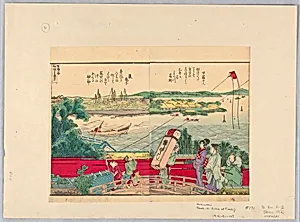
Kites at Tsuiji
1760-1849
Classification
landscapes
Department
Smithsonian Collection
Museum
Smithsonian American Art Museum
Credit
Gift of the Estate of Mrs. Robert H. Patterson
Accession Number
1941-31-127
Rights
Public Domain
About this artwork
Research in Progress
Art Historical Context
Katsushika Hokusai (1760–1849), one of Japan's most celebrated artists, created *Kites at Tsuiji* during his remarkably prolific career spanning nearly nine decades. Best known for his ukiyo-e woodblock, Hokusai captured the beauty of everyday life, nature, and landscapes in Edo period (1603–1868). This landscape classification piece likely depicts a vibrant scene of kite-flying at Tsuiji—a coastal or scenic spot in Japan—evoking the joy of traditional festivals where colorful kites danced against expansive skies, blending human activity with the natural world. Hokusai's mastery of composition, bold lines, and vivid colors revolutionized printmaking, influencing Western artists like Monet and Van Gogh. His innovative perspectives and dynamic portrayals of wind, water, and sky made Japanese art globally renowned. Though the medium remains unidentified, such works exemplify ukiyo-e's accessibility, produced in large editions for the public. Now housed in the Smithsonian American Art Museum as a gift from the Estate of Mrs. Robert H. Patterson, *Kites at Tsuiji* reflects cross-cultural exchange, bridging Japanese tradition with American collections. Ongoing research promises deeper insights into its creation, underscoring Hokusai's enduring legacy in celebrating fleeting moments of wonder. (198 words)