
二葉草七小町 清水小町|Kiyomizu Komachi
1790s
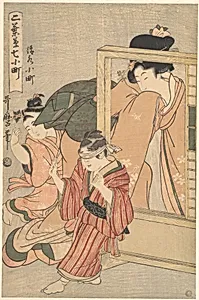
Medium
Woodblock print; ink and color on paper
Dimensions
H. 14 1/2 in. (36.8 cm); W. 9 1/2 in. (24.1 cm)
Classification
Prints
Culture & Period
Japan · Edo period (1615–1868)
Department
Asian Art
Museum
Metropolitan Museum of Art, New York, NY
Credit
Gift of Estate of Samuel Isham, 1914
Accession Number
JP986
Rights
Public Domain
Tags
Art Historical Context
Step into the vibrant world of Edo-period Japan with *Kiyomizu Komachi*, a woodblock print by the master ukiyo-e artist Kit Utamaro from the 1790s. Utamaro, renowned for his exquisite *bijin-ga*—portraits of beautiful womencreated this work during the height of the "floating world" culture, where prints like these brought scenes of everyday elegance and pleasure to the masses. Part of a series evoking the legendary beauty Ono no Komachi through contemporary figures, it captures a graceful woman, possibly named for Kyoto's famed Kiyomizu Temple, in a moment of playful intimacy. Crafted in the traditional *nishiki-e* technique of ink and color on paper, the print's delicate lines and subtle gradations of color highlight Utamaro's genius for conveying texture, from flowing kimono silk to soft skin tones. Measuring about 14½ by 9½ inches, it was designed for affordable enjoyment in urban homes or teahouses, reflecting the democratic appeal of ukiyo-e during the Edo period (1615–1868). This charming scene, tagged with games, women, and children at play, offers a glimpse into joyful feminine pastimes, blending high artistry with relatable humanity. A gift to the Metropolitan Museum of Art in 1914, it invites us to appreciate Japan's enduring celebration of beauty and leisure.
About the Artist
Kitagawa Utamaro · 1753–1806
Kitagawa Utamaro (c. 1753-1806) was one of the most celebrated masters of ukiyo-e woodblock printing, revolutionizing the art of bijin-ga (pictures of beautiful women) during Japan's Edo period. Born Kitagawa Ichitaro, his early life remains shrouded in mystery, with conflicting accounts placing his birth in Kyoto, Osaka, Yoshiwara in Edo (modern Tokyo), or Kawagoe in Musashi Province. Under the t...