
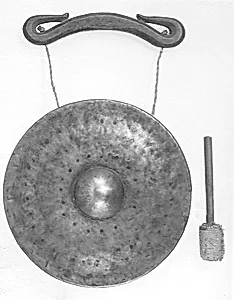
Klong mēng (ฆ้องเหม่ง)
Unknown Artist
late 19th century
Medium
Brass, wood
Dimensions
Gong: 14 × 11 1/4 × 2 1/4 in. (35.6 × 28.6 × 5.7 cm) Beater: 7 1/4 × 1 1/2 × 1 1/2 in. (18.4 × 3.8 × 3.8 cm)
Classification
Idiophone-Struck-gong
Culture
Thai
Department
Musical Instruments
Museum
Metropolitan Museum of Art, New York, NY
Credit
The Crosby Brown Collection of Musical Instruments, 1889
Accession Number
89.4.256
Rights
Public Domain
Art Historical Context
Nestled in the Metropolitan Museum of Art's Crosby Brown Collection of Musical Instruments the *Klong mēng* (ฆ้องเหม่ง) is a captivating late 19th-century Thai that exemplifies the artistry of traditional Southeast Asian craftsmanship. Crafted from gleaming brass with a sturdy wooden beater, thisophone-struck instrument measures 14 × 11¼ × 2¼ inches for the gong itself, its shallow, bossed profile designed to produce a resonant, penetrating tone when struck. The accompanying beater, at 7¼ × 1½ × 1½ inches, allows for precise control, highlighting the meticulous balance of form and function in Thai metalworking techniques. In Thai culture, gongs like the *Klong mēng* hold profound musical and ceremonial significance, often featured in classical ensembles such as the piphat orchestra for court rituals, theater performances, and festivals. Their bright, sustaining timbre cuts through ensembles, marking rhythmic cycles and evoking spiritual harmony—a nod to Thailand's rich Buddhist-influenced traditions. This piece, acquired in 1889, offers visitors a tangible link to 19th-century Siam, where such instruments were essential to communal life and artistic expression. (198 words)