
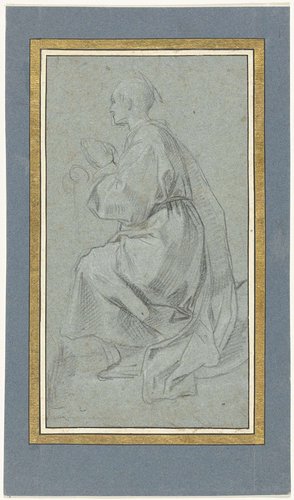
Knielende monnik
1500 - 1549
Medium
paper
Dimensions
228; 124
Rights
Public Domain
About this artwork
hoogte 228 mm x breedte 124 mm
Art Historical Context
### Knielende monnik (Kneeling Monk) Nestled in the quiet reverence of the early 16th century, this delicate drawing on paper, titled *Knielende monnik*, captures a humble monk in a moment of devotion. Created anonymously between 1500 and 1549, it measures a modest 228 mm high by 124 mm wide—perfectly sized for a personal sketchbook or devotional aid. The Northern Renaissance era, when this work emerged, was a time of profound religious fervor in Europe, just before the Protestant Reformation shook the Catholic world. Monastic figures like this one symbolized piety, contemplation, and the spiritual life that anchored daily existence for many. Rendered on paper, a medium increasingly accessible during the Renaissance thanks to expanding papermaking techniques from Italy and the Islamic world, the artwork likely served as a study or prayer companion. Anonymous artists were common in this period, often working in workshops or as illuminators for manuscripts, where technical skill trumped fame. The kneeling pose evokes humility and prayer, a motif echoing in altarpieces and books of hours, highlighting the era's blend of faith and emerging humanism. Though details of its creation remain shrouded, *Knielende monnik* invites us to pause and reflect on the enduring power of simple, sacred imagery. A window into pre-Reformation spirituality, it reminds visitors of art's role in nurturing the soul amid historical change.
About the Artist
anonymous
In the vast tapestry of art history, "Anonymous" stands not as a singular individual but as a collective designation for countless unidentified creators whose works have endured across millennia. These artists, spanning prehistoric cave painters to medieval illuminators and folk craftsmen, produced the foundational layers of human visual culture. Prior to the Renaissance, when individual fame emer...