
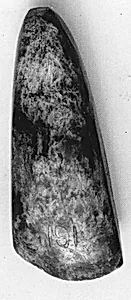
Knife
Unknown Artist
Medium
Nephrite
Dimensions
H. 2 1/2 in. (6.4 cm); W. 1 in. (2.5 cm); D. 5/8 in. (1.6 cm)
Classification
Jade
Culture
Switzerland
Department
Asian Art
Museum
Metropolitan Museum of Art, New York, NY
Credit
Gift of Heber R. Bishop, 1902
Accession Number
02.18.191
Rights
Public Domain
Art Historical Context
This delicate nephrite knife, measuring just 2½ inches in height, exemplifies the ancient artistry of Swiss culture. Crafted from nephrite—a tough, resilient variety of jade prized for its durability and lustrous green hue—this small tool (H. 2½ in.; W. 1 in.; D. ⅝ in.) likely served practical purposes while showcasing exceptional stone-working skill. Its presence in the Metropolitan Museum of Art's Asian Department highlights jade's cross-cultural allure, bridging European prehistoric traditions with the material's fame in Eastern carvings. Though the artist and exact date remain unknown, nephrite artifacts from Switzerland often trace to Neolithic periods (circa 4000–2000 BCE), when Alpine communities sourced this stone from distant quarries, trading it across regions. The knife's precise shaping reflects advanced grinding and polishing techniques, transforming raw mineral into a functional object of beauty. Such pieces underscore early human innovation in harnessing hard stones for tools superior to flint. A gift from collector Heber R. Bishop in 1902, this knife invites visitors to ponder the global journeys of jade—from Swiss mountains to New York galleries—revealing shared human ingenuity across millennia.