
Axe
Unknown Artist
Medium
Nephrite
Dimensions
H. 7 1/8 in. (18.1 cm); W. 3 1/16 in. (7.8 cm); D. 1 7/16 in. (3.7 cm)
Classification
Jade
Culture & Period
North America (Alaska, Cape Prince of Wales) · Prehistoric
Department
Asian Art
Museum
Metropolitan Museum of Art, New York, NY
Credit
Gift of Heber R. Bishop, 1902
Accession Number
02.18.241
Rights
Public Domain
Art Historical Context
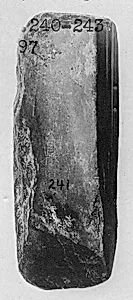
This striking nephrite axe, originating from prehistoric North America at Cape Prince of Wales, Alaska, exemplifies the ingenuity of ancient Arctic peoples. Measuring about 7 inches tall, 3 inches wide, and1.5 inches deep, its compact, handheld form suggests it was a practical tool for cutting, chopping, or shaping wood and bone in a harsh environment. Crafted during a time before metalworking, it reflects the resourcefulness of indigenous communities who relied on stone tools for survival. Nephrite, a dense and exceptionally tough variety of jade, was ideal for such implements due to its durability—often called "axe-jade" for this reason. The axe's smooth, polished surface reveals masterful prehistoric techniques: painstaking grinding and abrasion with softer stones and sand, transforming raw material into a gleaming artifact. Sourced likely from local Alaskan deposits, it highlights trade networks and cultural reverence for high-quality stone across the region. Acquired as a gift from Heber R. Bishop in 1902 and housed in the Metropolitan Museum of Art's Asian Art Department (noting nephrite's global significance), this piece bridges utility and artistry, offering a window into the daily lives and skilled craftsmanship of Cape Prince of Wales' prehistoric inhabitants.