
Knife (Bade-bade)
Unknown Artist
16th–19th century
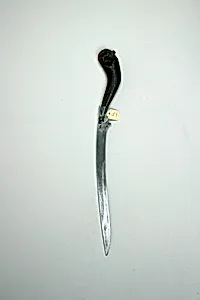
Medium
Steel, horn (rhinoceros)
Dimensions
L. 15 3/4 in. (40 cm); L. of blade 10 1/2 in. (26.6 cm); W. 2 11/16 in. (6.8 cm); Wt. 6.8 oz. (192.8 g)
Classification
Knives
Culture
Sumatran, Acheen
Department
Arms and Armor
Museum
Metropolitan Museum of Art, New York, NY
Credit
Bequest of George C. Stone, 1935
Accession Number
36.25.883
Rights
Public Domain
Art Historical Context
This striking *Knife (Bade-bade)* hails from the Sumatran Acheen culture, dating to the 16th–19th, a period when the Aceh Sultanate flourished as a powerful Islamic maritime empire in northern Sumatra, Indonesia. Measuring 15¾ inches long with a 10½-inch steel blade, this finely crafted weapon exemplifies the region's renowned metalworking traditions. Now housed in the Metropolitan Museum of Art's Arms Armor Department, it entered the collection through the 1935 bequest of George C. Stone. bade-bade, a type of short sword or large knife, was essential to Acheen warriors, blending utility for combat with symbolic prestige. Its handle, carved from rare rhinoceros horn, highlights the exquisite artisanal skill of Sumatran craftsmen, who valued such exotic materials for their durability and status. The steel blade, tapering to a sharp point, reflects advanced forging techniques that produced resilient edges suited to both battle and ceremonial display. In Acheen society, weapons like this were more than tools—they embodied cultural identity, valor, and craftsmanship amid trade routes connecting Asia and Europe. Visitors can appreciate how its balanced proportions (weighing just 6.8 ounces) made it agile in hand, offering a tangible glimpse into Sumatra's martial heritage.