
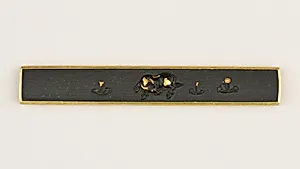
Knife Handle (Kozuka)
19th century
Medium
Copper-gold alloy (shakudō), gold
Dimensions
L. 3 13/16 in. (9.7 cm); W. 9/16 in. (1.4 cm); thickness 1/4 in. (0.6 cm); Wt. 1.4 oz. (39.7 g)
Classification
Sword Furniture-Kozuka
Culture
Japanese
Department
Arms and Armor
Museum
Metropolitan Museum of Art, New York, NY
Credit
Gift of Herman A. E. and Paul C. Jaehne, 1943
Accession Number
43.120.451
Rights
Public Domain
Tags
Art Historical Context
This exquisite *Knife Handle (Kozuka)*, crafted by the renowned metalworker Gotō Mitsuyoshi (known as Shinjō) in 19th-century Japan, exemplifies the pinnacle of samurai sword fittings. Measuring just under 4 inches long, this functional yet artistic piece served as the handle for a *kozuka*—a small utility knife into the scabbard alongside a warrior's katana or wakizashi. Produced during the late Edo period, it reflects the era's blend of martial tradition and refined artistry, when metalworkers elevated everyday arms into wearable sculptures. Made from *shakudō*—a copper-gold alloy prized for its deep, velvety black patina achieved through chemical patination and polishing—Mitsuyoshi inlaid it with gold to depict an ox, a symbol of strength and in Japanese culture. The Gotō family, hereditary metal artisans to the shoguns for centuries, mastered techniques like *zōgan* (inlay) and fine chasing, transforming humble materials into gleaming narratives. This *kozuka* showcases their signature precision, where every curve and texture invites close inspection. Housed in the Metropolitan Museum of Art's Arms and Armor Department (gift of Herman A. E. and Paul C. Jaehne, 1943), it offers a window into Japan's warrior aesthetic: beauty born of utility. Visitors, imagine a samurai drawing this knife not just for need, but with quiet admiration for its lifelike ox, embodying resilience amid feudal life's uncertainties.