
Knife Handle (Kozuka)
Unknown Artist
second half 18th century
Medium
Copper-silver alloy (shibuichi), gold, copper-gold alloy (shakudō)
Dimensions
L. 3 13/16 in. (9.7 cm); W. 9/16 in. (1.4 cm); thickness 1/4 in. (0.6 cm); Wt. 1.3 oz. (36.9 g)
Classification
Sword Furniture-Kozuka
Culture
Japanese
Department
Arms and Armor
Museum
Metropolitan Museum of Art, New York, NY
Credit
The Howard Mansfield Collection, Gift of Howard Mansfield, 1936
Accession Number
36.120.293
Rights
Public Domain
Tags
Art Historical Context
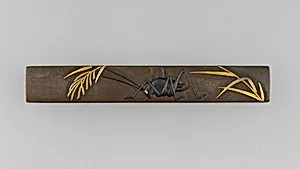
This exquisite *Kozuka*, or knife handle, hails from Japan in the second half of the 18 century, during the Edo when samurai culture flourished. As part of a sword's fittings, it served both practical and ornamental purposes, sliding into a scabbard pocket for a small utility knife. These fittings transformed weapons into wearable art, showcasing the wearer's status and appreciation for craftsmanship amid Japan's peaceful yet hierarchical society. Crafted from shibuichi—a copper-silver alloy prized for its subtle, smoky patina—along with shimmering gold and shakudō (a copper-gold alloy that develops a velvety black finish), the handle exemplifies advanced Japanese metalworking techniques like inlaying and patination. Delicate insect motifs, likely rendered in gold against the alloys' tones, evoke nature's intricate beauty, a common theme in Edo-era decorative arts symbolizing transience and harmony. Now in the Metropolitan Museum of Art's Arms and Armor Department, gifted from the Howard Mansfield Collection in 1936, this 3 13/16-inch (9.7 cm) piece weighs just 1.3 oz. (36.9 g), highlighting the precision of its makers. It invites visitors to marvel at how functionality met artistry in feudal Japan.