
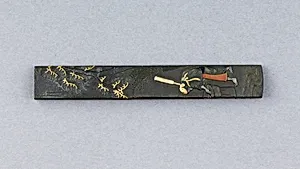
Knife Handle (Kozuka)
Unknown Artist
ca. 1615–1868
Medium
Copper-silver alloy (shibuichi), gold, silver, copper-gold alloy (shakudō)
Dimensions
L. 3 13/16 in. (9.7 cm); W. 9/16 in. (1.4 cm); thickness 1/4 in. (0.6 cm); Wt. 1.1 oz. (31.2 g)
Classification
Sword Furniture-Kozuka
Culture
Japanese
Department
Arms and Armor
Museum
Metropolitan Museum of Art, New York, NY
Credit
H. O. Havemeyer Collection, Bequest of Mrs. H. O. Havemeyer, 1929
Accession Number
29.100.1170
Rights
Public Domain
Tags
Art Historical Context
This exquisite *Kozuka*, or knife handle, hails from Japan during the Edo period (. 1615–1868), a time of peace under the Tokug shogunate when samurai culture emphasized refined craftsmanship. Carried as part of a sword ensemble, the kozuka held a small utility knife tucked into the scabbard, blending practicality with artistry. Its compact form—measuring just under 4 inches long—made it an ideal canvas for intricate metalwork, showcasing the era's mastery in sword fittings known as *koshirae*. Crafted from shibuichi (a copper-silver alloy prized for its subtle gray patina), accented with gold, silver, and shakudō (a copper-gold alloy that develops a rich black hue), this piece exemplifies advanced Japanese techniques like inlaying (*zōgan*) and patination. The surface likely features motifs of men amid trees, evoking nature's harmony and human endeavor—common themes in Edo decorative arts that symbolized resilience and the samurai ethos. As part of the Metropolitan Museum of Art's Arms and Armor collection, gifted through the H.O. Havemeyer bequest in 1929, this anonymous masterpiece highlights how everyday warrior tools became status symbols of aesthetic sophistication, bridging utility and beauty in Japanese culture.