
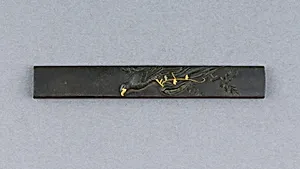
Knife Handle (Kozuka)
Unknown Artist
ca. 1615–1868
Medium
Copper-silver alloy (shibuichi)
Dimensions
L. 3 13/16 in. (9.7 cm); W. 9/16 in. (1.4 cm); thickness 1/4 in. (0.6 cm); Wt. 1.1 oz. (31.2 g)
Classification
Sword Furniture-Kozuka
Culture
Japanese
Department
Arms and Armor
Museum
Metropolitan Museum of Art, New York, NY
Credit
H. O. Havemeyer Collection, Bequest of Mrs. H. O. Havemeyer, 1929
Accession Number
29.100.1284
Rights
Public Domain
Tags
Art Historical Context
This exquisite knife handle, known as a *kozuka*, hails from Japan during the Edo period (. 1615–1868), a time of relative peace under the Tokug shogunate when samurai culture emphasized artistry over warfare. Crafted as part of sword furniture, the *kozuka* served as the handle for a small utility knife (*kogai*) tucked into the scabbard alongside a samurai's main blades. Though functional, these fittings became lavish status symbols, showcasing the wearer's wealth and taste through intricate metalwork. Made from shibuichi—a copper-silver alloy prized for its subtle, smoky patina that mimics aged bronze—the handle measures a compact 3 13/16 inches long, perfect for portability. Its surface likely features a bird motif, a common Japanese artistic theme evoking nature's grace, seasonal change, and poetic symbolism in ukiyo-e and metal crafts. Artisans employed sophisticated techniques like hammering, chasing, and possibly inlaying to achieve depth and luster, highlighting the mastery of *tosogu* (sword mounting) makers. Now in the Metropolitan Museum of Art's Arms and Armor Department, gifted through the H. O. Havemeyer Collection in 1929, this piece offers a window into Edo Japan's blend of utility and beauty, where even weapons' accessories were elevated to wearable art.