
Knife Handle (Kozuka)
Unknown Artist
ca. 1615–1868
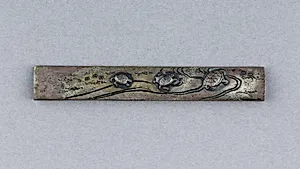
Medium
Silver
Dimensions
L. 3 13/16 in. (9.7 cm); W. 9/16 in. (1.4 cm); thickness 1/4 in. (0.6 cm); Wt. 1 oz. (28.3 g)
Classification
Sword Furniture-Kozuka
Culture
Japanese
Department
Arms and Armor
Museum
Metropolitan Museum of Art, New York, NY
Credit
H. O. Havemeyer Collection, Bequest of Mrs. H. O. Havemeyer, 1929
Accession Number
29.100.1262
Rights
Public Domain
Tags
Art Historical Context
This exquisite silver knife handle, known as a *kozuka*, hails from Japan during the Edo period (. 1615–1868), a time of relative peace when samurai culture flourished through refined craftsmanship. The *kozuka* served as the handle for a small utility knife (*kozukatana*) that tucked neatly into the scabbard of a samurai sword, blending practicality with artistry. Crafted in shimmering silver, it measures just under 4 inches long, making it a delicate yet essential accessory in the warrior's arsenal. Adorned with turtle motifs—symbols of longevity and good fortune in Japanese lore—the handle showcases the era's masterful metalworking techniques, likely involving chasing, engraving, or subtle inlays to bring the creatures to life. These fittings elevated everyday arms into wearable sculptures, reflecting the Edo aesthetic of understated elegance amid opulent detail. Turtles, often depicted swimming gracefully, evoked wishes for endurance, aligning with Zen-influenced ideals of harmony. Part of the Metropolitan Museum of Art's renowned H.O. Havemeyer Collection, this piece invites us to appreciate how Japanese artisans transformed weapons into treasures, bridging utility and symbolism in samurai life. A testament to enduring tradition, it whispers of a world where even a knife's grip carried profound cultural weight.