
Knife Handle with the Five Senses
ca. 1700
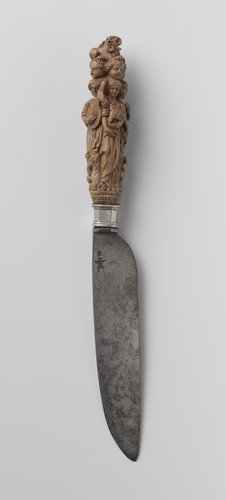
Medium
boxwood, steel and silver
Dimensions
24.5; 3; 2.8; 10
Rights
Public Domain
About this artwork
length 24.5 cm x height 3 cm x depth 2.8 cm (total)
Art Historical Context
Welcome to our virtual museum exhibit! The *Knife Handle with the Five Senses*, crafted anonymously around 1700, is a exquisite example of functional art from the late Baroque era. This small luxury object features a finely carved boxwood handle, approximately 10 cm long, fitted with steel and silver elements to form a complete knife measuring 24.5 cm in length, 3 cm high, and 2.8 cm deep. Such items were prized possessions among the European elite, blending everyday utility with symbolic artistry. Boxwood, a dense and smooth hardwood, was a favored medium for intricate miniature carvings during this period, allowing sculptors to achieve remarkable detail in compact forms—think delicate reliefs or figural groups. Here, the handle likely personifies the five senses (sight, hearing, smell, taste, and touch), a popular allegorical motif rooted in Renaissance humanism and still vibrant in 18th-century Northern European art. These representations served both decorative and philosophical purposes, reminding viewers of the sensory world's fleeting pleasures amid vanitas themes of mortality. This anonymous masterpiece highlights the era's craftsmanship, where skilled artisans in workshops across the Netherlands or Germany produced such objets d'art for collectors. Its survival speaks to the enduring appeal of merging beauty, symbolism, and practicality in everyday objects.
About the Artist
anonymous
In the vast tapestry of art history, "Anonymous" stands not as a singular individual but as a collective designation for countless unidentified creators whose works have endured across millennia. These artists, spanning prehistoric cave painters to medieval illuminators and folk craftsmen, produced the foundational layers of human visual culture. Prior to the Renaissance, when individual fame emer...