
Knife
ca. 1720–40
Medium
cutlery
Classification
cutlery
Department
Smithsonian Collection
Museum
Smithsonian American Art Museum
Credit
The Robert L. Metzenberg Collection, gift of Eleanor L. Metzenberg
Accession Number
1985-103-279-c
Rights
Public Domain
About this artwork
Research in Progress
Art Historical Context
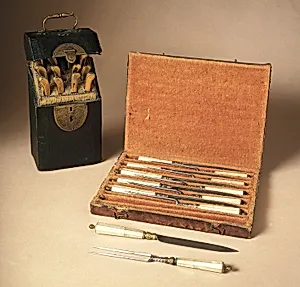
This elegant knife, dating to approximately 1720–40, exemplifies the refined craftsmanship of early American cutlery. Housed in the Smithsonian American Art Museum as part of the Robert L Metzenberg Collection—ously gifted by Eleanor L. Metzen—it reflects the colonial era's blend of functionality and subtle artistry. During this period, everyday objects like knives were often hand-forged by skilled silversmiths or cutlers, transforming utilitarian tools into heirlooms that spoke to a household's status and ingenuity. Though the artist remains unknown and research is ongoing, the knife's survival highlights the durability and cultural value placed on such items in 18th-century America. Cutlery from this time bridged European traditions with emerging colonial styles, featuring simple yet precise forms that prioritized balance and material quality—likely silver or horn-handled for dining or ceremonial use. These pieces offer a window into daily life, where even a knife could symbolize hospitality and self-sufficiency amid the challenges of frontier living. Visitors are invited to ponder its untold stories as scholars continue to uncover its provenance, reminding us how ordinary objects preserve extraordinary history.
About the Artist
Unknown
The artist designated as "Unknown" in our virtual museum's collection exemplifies a poignant chapter in art history: creators whose identities have faded into obscurity despite the enduring power of their work. With only one known artwork attributed to them in our holdings, this figure represents countless anonymous hands that shaped visual culture across centuries. Museums worldwide, including th...