
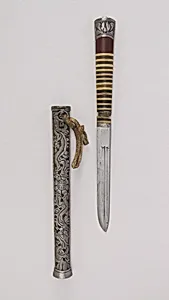
Knife with Sheath
Unknown Artist
18th–19th century
Medium
Steel, brass, iron, wood, horn, bone
Dimensions
H. with sheath 15 15/16 in. (40.5 cm); H. without sheath 12 3/4 in. (32.4 cm); H. of blade 6 1/2 in. (16.5 cm); W. 1 1/4 in. (3.2 cm); Wt. 5.3 oz. (150.3 g); Wt. of sheath 5.1 oz. (144.6 g)
Classification
Knives
Culture
Chinese
Department
Arms and Armor
Museum
Metropolitan Museum of Art, New York, NY
Credit
Bequest of George C. Stone, 1935
Accession Number
36.25.807a, b
Rights
Public Domain
Art Historical Context
This exquisite **Knife with Sheath**, by an unknown Chinese artist during the 18th–19th century, exemplifies the masterful blend of functionality and artistry in Qing dynasty arms. Measuring 15 15/16 inches (40.5 cm) with its sheath, the knife features a 6 1/2-inch (16.5 cm) steel blade, weighing a mere 5.3 ounces (150.3 g) without its 5.1-ounce (144.6 g) companion case. The hilt and sheath incorporate brass, iron wood, horn, and bone, materials chosen for their durability, aesthetic appeal, and symbolic resonance—horn and bone often evoking natural strength, while brass added a touch of elegance. In Chinese culture, such knives served practical roles as tools or personal defense weapons, reflecting the era's metallurgical prowess and decorative traditions. Artisans skillfully forged the steel blade for sharpness and balance, then adorned the fittings with mixed media to create ergonomic grips and protective sheaths that prevented wear. These objects highlight everyday craftsmanship amid imperial prosperity, where even utilitarian arms could showcase regional techniques. Now housed in the Metropolitan Museum of Art's Arms and Armor Department (Bequest of George C. Stone, 1935), this piece invites visitors to appreciate the intersection of utility and beauty in historical China, reminding us how weapons doubled as cultural artifacts.