
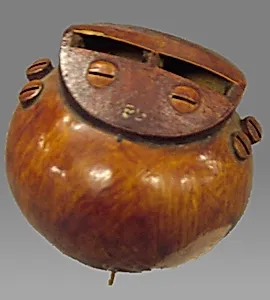
Ko-Tze
Unknown Artist
late 19th century
Medium
gourd, bamboo
Dimensions
2-1/2 in. x 4 in.
Classification
Aerophone-Whistle Flute-whistle
Culture
Chinese
Department
Musical Instruments
Museum
Metropolitan Museum of Art, New York, NY
Credit
The Crosby Brown Collection of Musical Instruments, 1889
Accession Number
89.4.1682
Rights
Public Domain
Art Historical Context
This Ko-Tze, a delicate Chinese whistle flute from the late 19th century, exemplifies the resourceful use of natural materials in traditional instrument-making. Crafted from a gourd body paired with bamboo, the compact instrument measures just 2-1/2 by 4 inches, suggesting it was designed for portability and intimate performance. As an aerophone classified specifically as a whistle flute, it produces sound through air vibration, likely creating clear, bird-like tones valued in Chinese musical traditions. Gourds and bamboo have long held cultural significance in East Asian craftsmanship, prized for their resonant qualities and sustainability. This example reflects the ingenuity of anonymous artisans who transformed humble plants into expressive musical tools during a period when such instruments played roles in both folk and courtly settings. Acquired in 1889 as part of the Crosby Brown Collection, the Ko-Tze now enriches the Metropolitan Museum’s holdings, offering visitors a tangible connection to China’s rich heritage of aerophones and the global exchange of musical knowledge in the late nineteenth century.