
Kôhi nijo
ca. 1828
Medium
nishikie, with metallic pigments and blindprinting
Dimensions
211; 188
Rights
Public Domain
About this artwork
collector's mark, verso, stamped: Lugt 2228
Art Historical Context
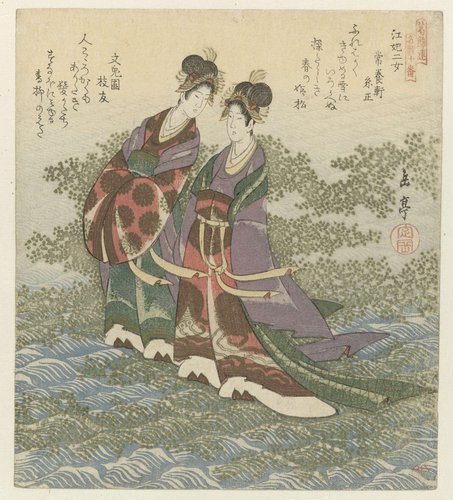
Behold the delicate beauty of *Kôhi nijo*, a nishikie woodblock created by Yashima Gakutei 1828. Measuring just 211 mm high by 188 mm wide, this intimate artwork exemplifies the refined artistry of Japan's Edo period (1603–1868 when ukiyo-e masters captured fleeting moments of elegance and nature. Gakutei, a versatile poet and printmaker active in Osaka and Kyoto, was renowned for surimono—luxury prints often commissioned for private celebrations, blending poetry with visual splendor. Nishikie, or "brocade pictures," refers to vibrant, multi-color woodblock prints that mimic luxurious textiles through precise carving and layering of inks. Gakutei's innovative use of metallic pigments adds a shimmering, jewel-like glow, while blindprinting (gauffrage) creates subtle embossed textures without ink, enhancing depth and tactility. These techniques elevated prints from mere illustrations to collector's treasures, reflecting the era's fascination with bijin-ga (beautiful women) or historical figures, as suggested by the evocative title. On the verso, a collector's mark (Lugt 2228) stamps its prestigious provenance, linking it to esteemed European connoisseurs. *Kôhi nijo* invites us to appreciate the harmonious fusion of technology and tradition in ukiyo-e, a cultural phenomenon that later inspired global modernists like Van Gogh.
About the Artist
Yashima Gakutei · 1786–1868
Yashima Gakutei (c. 1786–1868), born in Osaka as the illegitimate son of a Tokugawa shogunate samurai named Hirata, adopted the name from his mother's subsequent marriage into the Yashima clan. Little is documented about his early years beyond these familial ties, but he pursued artistic training under the esteemed ukiyo-e masters Totoya Hokkei and Katsushika Hokusai, absorbing their precision in ...