
Kohl Flask
Unknown Artist
7th–8th century
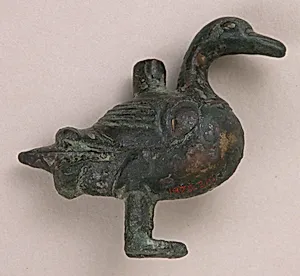
Medium
Bronze; cast and chased
Dimensions
H. 2 in. (5.1 cm) W. 2 1/8 in. (5.4 cm) D. 13/16 in. (2.1 cm) Wt. 1.1 oz. (31.2 g)
Classification
Metal
Department
Islamic Art
Museum
Metropolitan Museum of Art, New York, NY
Credit
Fletcher Fund, 1975
Accession Number
1975.315
Rights
Public Domain
Tags
Art Historical Context
This delicate bronze kohl flask, dating to the 7th–8th century, hails from the early Islamic world, a time of rapid cultural and artistic flourishing under the Umayyad Caliphate. Crafted as a portable container for kohl—an ancient eyeliner paste used for cosmetic and protective purposes—the flask's petite size (just 2 inches tall) made it an everyday luxury item, likely carried by women or travelers. Its presence in the Metropolitan Museum of Art's Islamic Art Department highlights the sophistication of early Islamic metalwork, blending utility with aesthetic refinement. Expertly made through casting—pouring molten bronze into a mold—followed by chasing, a technique of hammering and engraving fine details, the flask features motifs of birds, a recurring symbol in Islamic art evoking grace, freedom, and paradise gardens from Quranic imagery. These chased decorations add texture and narrative depth to the smooth bronze surface, showcasing artisans' mastery of small-scale precision. As a testament to the era's cross-cultural exchanges—from Byzantine and Sasanian influences—this unassuming object reveals the beauty in daily life, inviting us to appreciate how early Islamic craftsmen elevated the mundane into art. (198 words)