
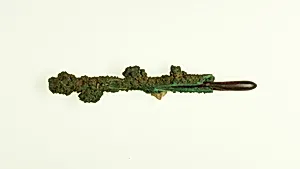
Kohl stick
Unknown Artist
ca. 1295–1070 B.C.
Medium
Hematite, bronze
Dimensions
L. 8.8 cm (3 7/16 in.)
Classification
Kohl stick
Period
New Kingdom, Ramesside
Department
Egyptian Art
Museum
Metropolitan Museum of Art, New York, NY
Credit
Rogers Fund and Edward S. Harkness Gift, 1922
Accession Number
22.1.41
Rights
Public Domain
Tags
Art Historical Context
Step into the vibrant world of ancient Egypt with this elegant kohl stick, dating to the New Kingdom's Ramesside period (ca. 1295–1070 B.C.), during Dynasties 19–20. Crafted from hematite—a dense, iron-rich stone prized for its natural black pigment—and fitted with a bronze element, this 8.8 cm tool was essential for applying kohl eye makeup. Both men and women used it daily, lining their eyes to protect against the harsh desert sun's glare, enhance beauty, and invoke spiritual protection against the evil eye. Hematite's choice reflects masterful Egyptian craftsmanship, as its powdery residue mixed with oils or fats to create the signature bold lines seen in tomb paintings and statues. Bronze, a hallmark of New Kingdom metallurgy, added durability to the handle, showcasing advanced metalworking skills amid the era of grand pharaohs like Ramesses II. This unassuming cosmetic tool reveals the sophistication of Ramesside daily life, blending practicality with ritual. Now at the Metropolitan Museum of Art (Rogers Fund and Edward S. Harkness Gift, 1922), it connects us to a culture where beauty was a divine pursuit.