
Kom
1725 - 1750
Medium
bowl
Dimensions
5; 10
Rights
Public Domain
About this artwork
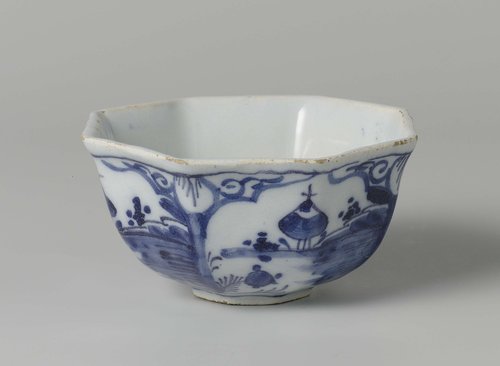
Kom met acht hoeken van faience. Blauw beschilderd.
Art Historical Context
Nestled among the treasures of 18th-century European ceramics, this anonymous *Kom* (bowl) from 1725–1750 exemplifies the artistry of Dutch faience production. Crafted from tin-glazed earthenware, bowl stands just 5 cm high and 10 cm in diameter, its distinctive octagonal shape—adorned with eight elegant corners—adding a geometric flair to its modest form. Delicately painted in blue, it reflects the era's fascination with vibrant, underglaze decoration that brought affordability and beauty to everyday tableware. Faience, a hallmark of workshops like those in Delft, mimicked the prized blue-white porcelain imported from China during the Dutch Golden Age. Artisans applied cobalt blue pigments beneath a glossy tin glaze, firing the piece twice to achieve its luminous, durable finish This technique not only resisted wear from daily use but also allowed intricate designs to shine through, making such bowls coveted items in prosperous Dutch households. Though anonymous, this *Kom* whispers of exchange and craftsmanship, bridging East and West in a humble vessel. Its survival offers a into 18th-century domestic life, where functionality met subtle sophistication.
About the Artist
anonymous
In the vast tapestry of art history, "Anonymous" stands not as a singular individual but as a collective designation for countless unidentified creators whose works have endured across millennia. These artists, spanning prehistoric cave painters to medieval illuminators and folk craftsmen, produced the foundational layers of human visual culture. Prior to the Renaissance, when individual fame emer...