
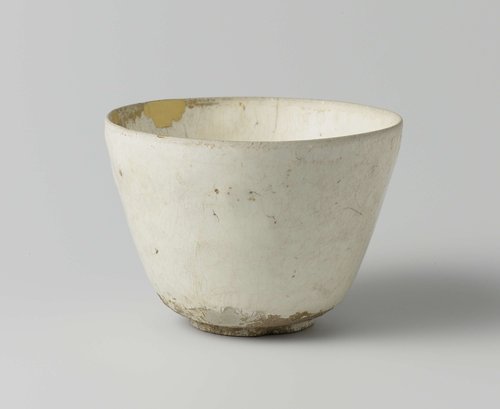
Kom met drie proenen en goudlakreparatie
ca. 1100 - ca. 1299
Medium
turning
Dimensions
8.9; 12.6; 5.1
Rights
Public Domain
About this artwork
steengoed met een celadon glazuur
Art Historical Context
This exquisite stoneware bowl, titled *Kom met drie proenen goudlakreparatie (Bowl with Three Spouts and Gold Lac Repair), dates to around 1100–1299, a golden age for East Asian ceramics. Crafted using lathe-turning techniques for its precise form—standing just 8.9 cm high and 12.6 cm in diameter—it features three distinctive spouts, or "proenen," adding both functionality and elegance. The bowl's surface is coated in a signature celadon glaze, a jade-green finish that revolutionized pottery through its subtle luster and crackle effect. Celadon ware emerged during China's Song dynasty, where potters mastered high-fired stoneware in dragon kilns, controlling iron oxides in the glaze for that prized, serene hue evoking nature's beauty. These vessels traveled vast trade routes, reaching Europe and the Islamic world as luxury imports, symbols of refinement and exotic wealth. Their durability made stoneware ideal for such journeys. The visible gold lacquer repairs highlight the bowl's cherished status—valued enough to mend rather than discard, using a technique akin to Japanese kintsugi that celebrates imperfection. Discovered likely in a European context, this artifact bridges cultures, whispering tales of medieval global exchange and artistry's enduring appeal.
About the Artist
anonymous
In the vast tapestry of art history, "Anonymous" stands not as a singular individual but as a collective designation for countless unidentified creators whose works have endured across millennia. These artists, spanning prehistoric cave painters to medieval illuminators and folk craftsmen, produced the foundational layers of human visual culture. Prior to the Renaissance, when individual fame emer...