
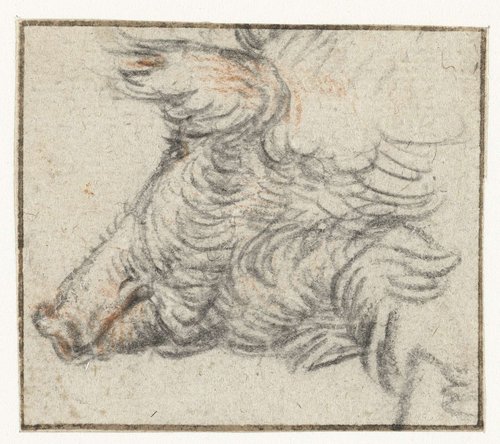
Kop van een zwijn
1635 - 1654
Medium
paper
Dimensions
65; 57
Rights
Public Domain
About this artwork
zwart en rood krijt
Art Historical Context
**Kop van een zw (Head of a Pig)**Paulus Potter (1625–1654), a master of the Dutch Golden Age created this intimate drawing between 1635 and 1654. At just 57 × 65 mm, it's a delicate study on paper using black and red chalk—techniques favored by 17th-century artists for versatility in capturing texture and form. Potter, renowned for his lifelike animal portraits, often from life to inform his larger oil paintings of rural scenes teeming with cattle, horses, and barnyard creatures. The use of zwart en rood krijt (black and red chalk) highlights Potter's skill in rendering the pig's head with remarkable realism. Black chalk provides deep shadows and coarse bristles, while red adds warm tones to the snout and ears, evoking the animal's fleshy vitality. Such small-scale drawings were typical preparatory works in Potter's studio practice, reflecting the era's emphasis on direct observation of nature—a hallmark of Dutch realism amid the prosperous, scientifically curious Golden Age. This piece offers a glimpse into Potter's meticulous eye for anatomy, bridging everyday farm life with artistic innovation. Though modest in size, it embodies the cultural fascination with the natural world, inviting visitors to appreciate the humble pig as a subject of profound beauty and study.
About the Artist
Paulus Potter · 1625–1654
Paulus Potter (1625–1654) was a Dutch Golden Age painter whose short life — he died at just twenty-eight years of age — belied an artistic achievement of remarkable originality and influence. Born in Enkhuizen in 1625, Potter trained under his father, the painter Pieter Potter, and later in Amsterdam and Delft, where he absorbed the technical standards of the flourishing Dutch painting tradition. ...