
BK-1975-88
1780
Medium
silver (metal)
Dimensions
28; 2800; 54
Rights
Public Domain
About this artwork
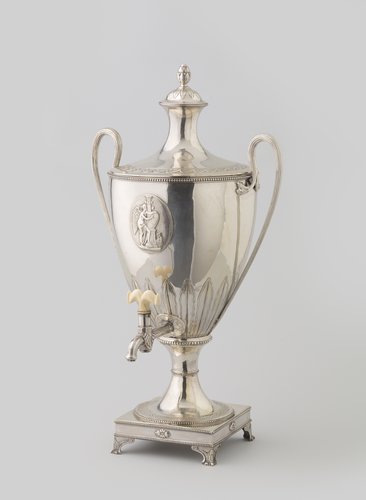
Kraantjeskan van zilver, met handvat van ivoor. Het zich verbredende vat is licht convex gewelfd. Het heeft twee hoge, geribde oren. Het kraantje heeft een gespleten ivoren handvat. Met los deksel.
Art Historical Context
**BK-1975-88: Silver Kraantjeskan Andrew Fogelberg (1780)** Step into the refined world of 18th European craftsmanship with this elegant silver kraantjeskan or tap jug, crafted by Andrew Fogel in 1780. Standing at 54 cm with a depth of 28 and weighing a substantial 2.8 kg, this piece features a gently convex, widening body that flares gracefully outward, topped by a loose lid. Its two tall, ribbed ear handles and ivory grip invite the hand, while the innovative tap—complete with a split ivory handle—allowed precise pouring of wine, punch, or other beverages without spills, a hallmark of sophisticated tableware. Fogelberg's work exemplifies the high artistry of late Rococo silversmithing, blending functionality with opulent materials. Silver, a symbol of wealth and status, was meticulously hammered and chased for its shimmering surface, while ivory accents added an exotic, tactile luxury sourced from distant trade routes. Produced during the Enlightenment era, when Dutch and Northern European homes prized such vessels for social gatherings, this jug reflects the era's blend of practicality and display. Today, it captivates as a testament to masterful metalworking techniques, where form enhances use. Visitors will appreciate how its balanced proportions and subtle curves embody the silversmith's skill, turning everyday serving into a ritual of elegance. (198 words)