
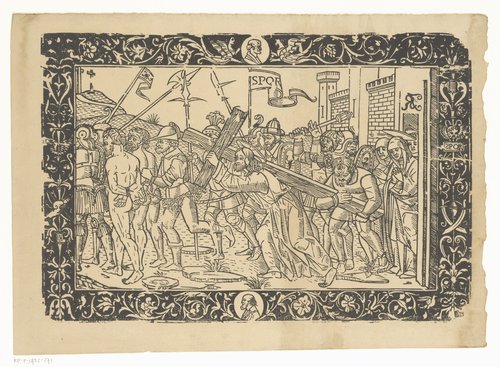
Kruisdraging
1500 - 1549
Medium
paper
Dimensions
188; 278
Rights
Public Domain
About this artwork
beeld: hoogte 188 mm x breedte 278 mm
Art Historical Context
### Kruisdraging (Carrying of the CrossThis poignant anonymous work, titled *Kruisdraging*—Dutch for "Carrying of the Crossdepicts a pivotal moment from the Passion of Christ, where bears the cross to Calvary amid a crowd of figures. Created between 1500 and 1549, it emerges from the Northern Renaissance, a time when religious devotion deeply influenced art across the Low Countries. The intimate scale (188 mm high by 278 mm wide) suggests it may have been a personal devotional drawing or preparatory sketch, inviting quiet contemplation rather than grand display. Rendered on paper, a humble yet versatile medium popular in the 16th century, the piece highlights the era's advancements in techniques like ink, chalk, or watercolor, allowing for detailed line work and subtle shading. Anonymous artists were common in this period, often working in workshops where master-apprentice traditions produced high-quality religious imagery for both elite patrons and everyday believers. Such works played a key role in spreading biblical narratives visually, especially amid the Reformation's religious upheavals. Though specifics of its creation remain elusive, *Kruisdraging* embodies the emotional intensity of late medieval piety transitioning into Renaissance humanism, reminding us how art bridged faith and daily life in 16th-century Europe. A treasure for its humility and historical whisper.
About the Artist
anonymous
In the vast tapestry of art history, "Anonymous" stands not as a singular individual but as a collective designation for countless unidentified creators whose works have endured across millennia. These artists, spanning prehistoric cave painters to medieval illuminators and folk craftsmen, produced the foundational layers of human visual culture. Prior to the Renaissance, when individual fame emer...