
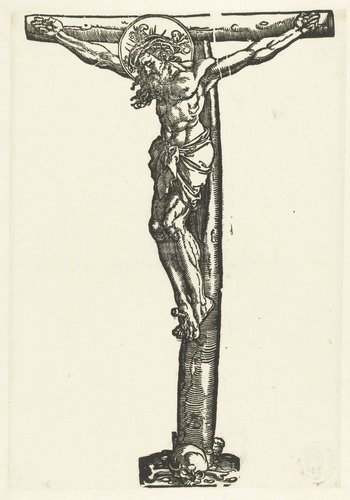
Kruisiging
1480 - 1520
Medium
paper
Dimensions
324; 225
Rights
Public Domain
About this artwork
verzamelaarsmerk, verso linksonder, gestempeld: Lugt 240
Art Historical Context
**Kruisiging (Crucifixion)** *Anonymous, 1480–1520* *Paper, h 324mm × w 225mm* This depiction of the Crucifix, titled *Kruisiging* in Dutch, hails from the late 15th to early 16th century pivotal era bridging the Late Gothic and Northern Renaissance periods in the Low Countries. Created anonymously, it reflects the deep religious devotion of the time, when scenes of Christ's suffering were central to devotional art, inspiring prayer and contemplation among the faithful. The modest paper medium suggests it may be a preparatory drawing, print, or personal votive image, common in workshops where artists honed intricate compositions before larger panels or altarpieces. At roughly 32 x 22 cm, the work's intimate scale invites close viewing, evoking the portable piety of the Northern Renaissance. Paper, though fragile, allowed for delicate lines and shading techniques that captured emotional depth—think of masters like the Master of the Kruisiging or early followers of van Eyck, though unattributed here. Its survival underscores the era's innovative use of paper for affordable, widespread religious imagery. A fascinating detail graces the verso: a stamped collector's mark (Lugt 240), linked to the esteemed 19th-century collector Eugène Dutuit. This provenance highlights the artwork's journey through discerning hands, connecting us today to centuries of admiration for Netherlandish artistry. A quiet testament to faith and craftsmanship!
About the Artist
anonymous
In the vast tapestry of art history, "Anonymous" stands not as a singular individual but as a collective designation for countless unidentified creators whose works have endured across millennia. These artists, spanning prehistoric cave painters to medieval illuminators and folk craftsmen, produced the foundational layers of human visual culture. Prior to the Renaissance, when individual fame emer...