
L'Oracle
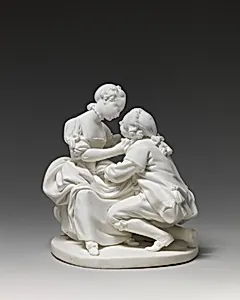
Medium
Soft-paste biscuit porcelain
Dimensions
confirmed: 5 9/16 × 5 3/16 × 4 7/8 in. (14.1 × 13.2 × 12.4 cm)
Classification
Ceramics-Porcelain
Culture
French, Sèvres
Department
European Sculpture and Decorative Arts
Museum
Metropolitan Museum of Art, New York, NY
Credit
Gift of R. Thornton Wilson, in memory of Florence Ellsworth Wilson, 1952
Accession Number
52.2.4
Rights
Public Domain
Tags
Art Historical Context
L'Oracle, created around 1766 by the renowned Sèvres Manuf in collaboration with sculptor Étienne-Maurice Falcon, exemplifies the height of 18th-century French porcelain. This soft-paste porcelain sculpture, measuring about 5½ × 5¼ × 4⅞ inches, captures an intimate scene involving male and female figures, ev the mystical theme of an oracle. Falconet, a leading Rococo sculptor known for his elegant, dynamic forms, modeled this piece for Sèvres—the royal porcelain factory favored by Louis XV—blending sculpture with luxury ceramics. Soft-paste biscuit porcelain, unglazed and matte like fine marble, was a French innovation that allowed for extraordinary detail and realism in figurative works. Unlike glossy glazed wares, biscuit pieces were prized for their sculptural purity, often displayed as standalone objets d'art in aristocratic salons. Falconet's design highlights the medium's versatility, showcasing fluid drapery, expressive poses, and subtle textures that mimic terracotta or stone. Housed in The Metropolitan Museum of Art's European Sculpture and Decorative Arts collection, L'Oracle reflects the Enlightenment-era fascination with antiquity and prophecy, underscoring Sèvres' role in elevating porcelain from tableware to high art. A gift from R. Thornton Wilson in 1952, it invites visitors to marvel at the delicate craftsmanship that once graced Versailles.
About the Artist
Sèvres Manufactory|Etienne-Maurice Falconet · 1740–present
The Sèvres Manufactory, one of Europe's premier porcelain producers, was established in 1740 as the Manufacture de Vincennes under the patronage of Queen Marie Leszczyńska, who sought to rival Meissen and Chantilly porcelains with French soft-paste innovations. Initially a private venture, it relocated to Sèvres in 1756 in a purpose-built facility designed by architect Laurent Lindet near Madame d...