
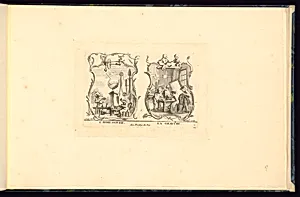
L’HORLOGERIE / LA GRAVÛRE
mid- 18th–late 18th century
Classification
Department
Smithsonian Collection
Museum
Smithsonian American Art Museum
Credit
Purchased for the Museum by the Advisory Council
Accession Number
1921-6-349-17
Rights
Public Domain
About this artwork
Research in Progress
Art Historical Context
Jacques Bacheley, a artist active from 1712 to 1781, created *L’Horlogerie / La Gravure* during the mid- to late 18th century a vibrant era of Enlightenment curiosity in Europe. This print, now housed in the Smithsonian American Museum's Smithsonian Collection, captures the intricate worlds of watchmaking (*horlogerie*) and (*gravure*). Purchased by the museum's Advisory Council, it exemplifies the period's fascination with mechanical precision and artisanal mastery—skills that symbolized progress and ingenuity amid France's flourishing luxury trades. As a classified print, the work likely employs techniques like etching or line engraving, which allowed for detailed reproductions of complex subjects. Watchmaking, a prestigious craft centered in hubs like Paris and Geneva, blended artistry with emerging scientific principles, reflecting the Rococo-to-Neoclassical shift toward refined realism. Bacheley's depiction would have appealed to educated collectors, highlighting the meticulous tools and processes that powered pocket watches and ornate timepieces. Though research continues, this piece offers a window into 18th-century cultural values, where prints democratized knowledge of elite professions. Visitors today can appreciate its role in bridging European craftsmanship with American collections, inviting reflection on time's artistry.