
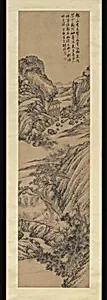
清 胡璋 山水 軸|Landscape
dated 1887
Medium
Hanging scroll; ink and color on paper
Dimensions
56 1/2 x 14 5/8 in. (143.5 x 37.1 cm)
Classification
Paintings
Culture & Period
China · Qing dynasty (1644–1911)
Department
Asian Art
Museum
Metropolitan Museum of Art, New York, NY
Credit
Gift of Robert Hatfield Ellsworth, in memory of La Ferne Hatfield Ellsworth, 1986
Accession Number
1986.267.63
Rights
Public Domain
Art Historical Context
This exquisite hanging scroll, titled *Landscape* (山水軸) by Hu Zhang, dates to 1887 during the late Qing dynasty (16441911). Crafted in ink and color on paper, it measures an impressive 56½ x 14⅝ inches, designed to unroll dramatically for intimate viewing in a scholar's studio or grand hall. As a quintessential *shanshui* (mountain-and-water) painting, it captures the timeless Chinese reverence for nature's majestic harmony, where towering peaks, misty valleys, and flowing rivers evoke a sense of infinite space and poetic tranquility. Hu Zhang, working in the waning years of imperial China, embodies the literati tradition of the Qing era, blending meticulous brushwork with subtle color washes to suggest rather than delineate. Ink gradients create ethereal atmospheres, while selective colors heighten dramatic contrasts—hallmarks of this medium that allowed artists to express philosophical ideals like Daoist unity with the cosmos. Hanging scrolls like this were not mere decorations but conversation pieces, often inscribed with poetry or seals, fostering cultural exchange among elites amid China's turbulent transition to modernity. Now housed in the Metropolitan Museum of Art's Asian Art Department, thanks to a generous 1986 gift, this work offers visitors a window into Qing aesthetics, reminding us how art bridged personal contemplation and imperial legacy.